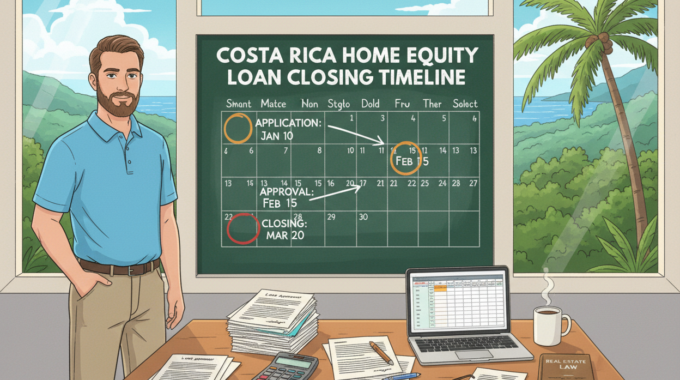
If you own property in Costa Rica, you might be wondering about the timeline for accessing your equity. In the United States, a standard home equity loan can take two to eight weeks to finalize. The process here is different.
Costa Rica’s market has unique documentation needs and legal steps. We run a documentation-driven process at GAP Equity Loans. We coordinate with private lenders to secure a first-lien mortgage position—this isn’t a second-lien product.
Your closing timeline depends on your preparation. Having your paperwork ready speeds things up. Property complexity and your equity position also affect the schedule.
We focus on structured equity loans backed by Costa Rican real estate. Our guideline is up to 50% loan-to-value (LTV). This article offers educational insights—it’s not legal advice or a loan offer. Let’s walk through what you can expect.
Overview of Costa Rica Home Equity Loans
A home equity loan in Costa Rica provides a direct path to convert your property’s built-up value into usable capital. This type of financing is distinct from products you may know in the U.S. market.
Understanding the Concept of Equity Loans in Costa Rica
Home equity is the portion of your property you own outright. It’s the difference between its market value and any debt against it. An equity loan lets you borrow against this accumulated value.
At GAP Equity Loans, we coordinate with private lenders. We place them in a first-lien mortgage position on your Costa Rican property. This means the lender holds the primary security interest.
We do not offer second-lien positions, HELOCs, or crowdfunding. Our focus is solely on structured equity loans backed by Costa Rican real estate.
The Role of Documentation in the Process
Our entire process is documentation-driven. The quality and completeness of your paperwork are critical from day one.
Our guideline is up to a 50% loan-to-value (LTV) ratio. For example, on a $400,000 property with no debt, you might access up to $200,000. Requests with a lower LTV and stronger documentation generally fit better for approval.
This focus on documents, combined with Costa Rica’s unique legal systems, directly shapes the loan timeline.
The Documentation-Driven Process Explained
The journey from application to funding follows a clear, documentation-centric path. We manage a structured sequence to secure your equity loan.
Each phase depends on the previous one. Delays in providing paperwork or title issues can extend the overall timeline.
Step-by-Step Process: Intake to Lien Registration
It starts with an intake. We gather details about your property and funding needs.
Next, you submit all required documents. This step often dictates the pace. After that, we conduct due diligence and title review.
We verify ownership and check for liens. This confirms the property can support a first-lien mortgage.
Then, we move to structuring the loan terms with the private lender. Closing involves signing legal documents and preparing funds.
The final step is lien registration with Costa Rican authorities. This secures the lender’s first-position interest.
Coordinating with Private Lenders for a First-Lien Mortgage
We coordinate directly with private lenders. Our goal is to place them in a first-lien mortgage position on your property.
This coordination requires clear communication. It allows for customized structuring when your documentation is strong.
There are no guarantees of approval or a specific closing timeframe. Your preparation directly impacts speed. Understanding the typical loan approval process can be helpful for context.
Essential Borrower Preparation and Required Documents
We’ve found that the most efficient closings begin with a borrower who understands exactly what documents are required. Your preparation is the engine that drives the entire process forward. Having everything organized before you start dramatically shortens the timeline.
Property Details and Verification
Start with comprehensive property details. This includes the location, size, and current use. You’ll need a current plano catastrado—the official survey from the National Registry.
For many properties, legal water access letters are critical. Also gather any easement or right-of-way records. These documents verify your asset’s value and legal standing.
Ownership, Tax Status, and Additional Legal Documents
Clarify your ownership structure. Is the title held personally or through a Costa Rican corporation? Provide corporate books if applicable.
Have your property tax payment records ready. Your personal identification and contact information are essential. Lenders will also want to see proof of your current equity position and a clear explanation for the loan funds’ intended use.
Complete documentation covering income, work history, and credit score supports a stronger application. Incomplete paperwork is the most common cause for delay.
how-long-does-a-home-equity-loan-take-to-close: Factors That Impact Closing Time
The speed of your equity loan closing hinges on a combination of financial and legal factors. There is no single guaranteed timeline, as several elements interact.
Guideline Up to 50% LTV and Its Implications
Our guideline is up to a 50% loan-to-value ratio. For a property with a $500,000 market value and no debt, the maximum loan amount is $250,000.
However, requesting a lower percentage of your home’s value often improves fit. A 30% or 40% LTV presents less risk to the lender and may speed approval.
Importance of Strong Documentation and Lower LTV
Complete, organized documentation is the most powerful tool for speed. It directly impacts underwriting and can shave days or weeks off the process.
Your property’s equity position and home value are assessed alongside your credit profile. Clear title and simple property terms help avoid delays.
Coordination with the private lender adds a variable timeline factor. We manage these variables, but your preparation sets the pace for accessing your home equity.
Efficiency Tips for a Smooth Loan Closing
Borrowers who take charge of their documentation early set themselves up for success. Your preparation is the single biggest factor you control. It directly influences the speed and smoothness of the entire process.
Preparing and Organizing Your Documentation Early
Start by creating a digital folder with every required item. Label files clearly for easy access. Use a simple checklist to ensure nothing is missed.
Proactively verify your property title with a local attorney. Resolve any outstanding tax payments. Keep corporate books current if you hold title through a company.
This upfront work prevents delays during underwriting. It shows lenders you are organized and serious about accessing funds.
Leveraging Digital Tools and Automated Underwriting
In the U.S., automated underwriting and AVMs can speed approvals to just days. Costa Rica’s legal registry systems are more manual.
Understand this difference to set realistic time expectations. Still, digital tools help. Remote document signing can expedite steps for borrowers abroad.
Responsive communication is crucial. Reply to requests the same day. This can shave a week off your total closing time.
Remember, business culture here is casual and relationship-oriented. Building a collaborative rapport with your coordinator helps solve small issues quickly. We cannot guarantee specific timelines, but prepared borrowers experience the smoothest processes.
Navigating Underwriting, Appraisal, and Due Diligence in Costa Rica
Underwriting and due diligence are the critical steps where lenders assess risk and verify details. This phase moves beyond your paperwork to a professional evaluation of your property and proposal.
Title Review and Property Appraisal Considerations
We’ll clarify the underwriting phase. Here, the private lender evaluates your full package. They review your equity position, property value, and documentation strength.
Credit history matters, but strong equity and a clean title often carry significant weight. We do not publish interest rates or payment examples. Each loan is individually structured.
Property appraisal requires local expertise. A licensed perito valuador determines market value. They consider location, access, and legal status specific to Costa Rica.
Title review is paramount. The National Registry system is examined for clean ownership. It checks for liens, boundary accuracy, and legal clouds.
Issues discovered here must be resolved before closing. This can extend timelines. We coordinate first-lien mortgage positions, not HELOCs or revolving lines of credit.
Understanding these steps helps you grasp the lender’s perspective on potential risks. This information is educational, not legal advice or a loan offer.
Final Thoughts on a Successful Home Equity Loan Journey
Successfully securing a home equity loan here is a partnership built on preparation and transparency. You control the pace by organizing your documents and understanding your property’s legal status. A realistic loan-to-value request and clear title pave the way for a smoother process.
The closing timeline varies, often between two to eight weeks. Well-prepared borrowers who respond quickly consistently close faster. Remember, as with U.S. markets where a home equity loan may take, not every application results in approval. Thorough preparation gives you the best chance to access your property’s value.
Ready to explore your options? Contact us via WhatsApp at +506 4001-6413, call USA/Canada toll-free at 855-562-6427, or visit gapequityloans.com. This is educational information—not legal advice or a loan offer. We’re here to guide you, Costa Rica style: straightforward and collaborative.
FAQ
What is the typical timeline for closing a home equity loan in Costa Rica?
The typical timeline for closing a Costa Rica home equity loan is 4 to 8 weeks. This process can be efficient when you work with a specialized service that manages the documentation and lender coordination. The exact time depends on how quickly you can provide the required property and ownership documents, as well as the lender’s due diligence schedule.
What documents are absolutely essential to start the process?
You’ll need several key documents to start. The most critical are a certified copy of your property deed (escritura), your passport, and proof of your property tax (IBI) status. We also need a recent property survey (plano catastrado) and a registered property value declaration. Having these organized upfront is the single biggest factor in speeding up your approval and closing.
How does the loan-to-value (LTV) ratio affect my loan?
Lenders here typically offer up to 50% Loan-to-Value. This means your loan amount is based on a percentage of your property’s appraised market value. A lower requested LTV, like 40%, often leads to faster underwriting and better interest rates because it represents less risk for the lender. It directly impacts your terms and how quickly you can access funds.
Does my foreign credit score impact the approval?
While local private lenders focus heavily on the property’s equity and your clear title, your financial profile still matters. They will assess your overall ability to manage the monthly payment. A strong credit history can support your application, but the primary collateral is the real estate itself. We help present your full financial picture effectively.
How is this different from a Home Equity Line of Credit (HELOC)?
A home equity loan here provides a lump sum of money with a fixed interest rate and set repayment schedule—ideal for a specific project like debt consolidation or a major purchase. A HELOC, which is less common in this market, works like a revolving credit account where you draw funds as needed. The closing process for a standard equity loan is often more straightforward for property owners in Costa Rica.
Article by Glenn Tellier (Founder of CRIE and Grupo Gap)
Understand what-loan-to-value-means-costa-rica with our guide. We help you secure first-lien equity loans through a clear, documentation-driven process.
Need real-estate-lending-opportunities-outside-traditional-markets? We provide clear guidance on Costa Rica equity loans. Contact us at gapequityloans.com.
Understand how-private-lending-works-costa-rica. We guide you through our documentation-driven process for first-lien mortgages. Contact us at 855-562-6427.