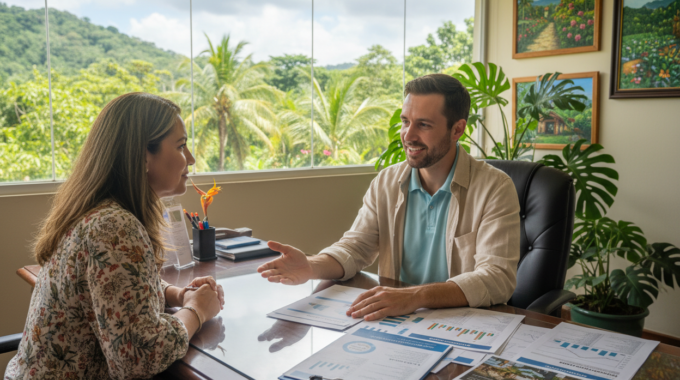
Costa Rica’s real estate market attracts international buyers. They seek lifestyle opportunities and solid investments. Yet, securing traditional bank financing here can be challenging for foreigners.
Private mortgage lending offers a flexible alternative. It uses your existing property equity. This differs from conventional bank loans and other smart alternatives for financing.
This guide serves an educational purpose. We explain how real estate-backed equity loans work here. Our content is informational—not legal, tax, or financial advice.
At GAP Equity Loans, we coordinate a documentation-driven process. We work with private lenders to place approved borrowers in a first-lien mortgage position. Our guideline reaches up to 50% loan-to-value (LTV).
Stronger documentation and a lower LTV improve your fit. We focus solely on this straightforward lending. We don’t handle HELOCs or crowdfunding.
We guide you from initial intake to closing and lien registration. Business here is approachable, but we maintain professional standards. Let’s explore your path to accessing property equity.
Introduction to Costa Rican Real Estate Financing
Owning a slice of paradise in Costa Rica is a dream for many, yet financing that dream presents unique hurdles. The country’s stable property market and strong legal protections for foreign ownership make it a magnet for international buyers. However, accessing traditional local bank loans can be a significant barrier for non-residents.
Exploring the Costa Rican Property Market
Coastal regions like Guanacaste and towns such as Jacó and Tamarindo show steady appreciation. Foreign investment in this real estate market has surged. This growth is driven by the country’s natural beauty and eco-conscious culture.
Buyers are attracted to diverse property types, from beachfront condos to mountain retreats. The legal framework here treats foreign and local owners equally. This security fuels a thriving investment environment.
Why Financing Abroad is a Growing Trend
Local banks often require borrowers to be legal residents. They demand extensive documentation, including translated credit reports and local co-signers. This process is slow and bureaucratic for non-residents.
These challenges have led many to explore alternative financing options. Private lending and seller financing offer greater flexibility and faster timelines. Working with knowledgeable professionals can help navigate these choices effectively.
Understanding Private Mortgage Lending in Costa Rica
For property owners in Costa Rica, accessing capital tied up in real estate often requires looking beyond traditional banking channels. Private mortgage lending fills this gap effectively.
Defining Private Mortgage Lending and Its Benefits
Private mortgage lending is an alternative financing method. A private lender provides a loan secured by a first-lien mortgage against your property here.
This differs from a local bank mortgage. Private lenders focus on your property’s equity and value. They are less concerned with your residency status or local credit history.
Our process is documentation-driven. We coordinate with the lender to place them in a clean first-lien position. It is not a HELOC, crowdfunding, or a second lien.
A general guideline reaches up to 50% loan-to-value. Stronger documentation and a lower LTV improve your fit for approval.
Benefits include faster timelines than banks and fewer residency barriers. It offers flexibility for foreign buyers exploring private loan terms in Costa Rica.
All agreements must be legally registered for protection. This content is for education only, not an offer or professional advice.
Documentation-Driven Loan Process
A systematic, documentation-driven process forms the bedrock of secure private mortgage lending in Costa Rica. This method protects both parties and ensures full legal compliance.
The Intake and Documentation Phase
We start with an intake conversation. We gather your basic information, property details, and financing goals.
Next, we collect specific documents. These include proof of property ownership, the registered survey (plano catastrado), and water availability letters. We also need your identification and contact info.
Due Diligence and Title Review Essentials
A qualified Costa Rican attorney then conducts a thorough title review. They verify ownership and check for any existing liens. This step confirms the property can legally support a new first-lien mortgage.
A licensed notary public oversees the closing and registers the mortgage. All foreign documents require certified Spanish translation. This meticulous process prevents future legal issues.
Borrowers should budget for standard financing costs. These include transfer taxes, registration fees, and notary charges. Professional guidance ensures every step meets National Registry requirements.
Coordinating with Private Lenders for First-Lien Mortgages
Securing a first-lien mortgage through a private lender involves a clear, coordinated process we manage. At GAP Equity Loans, we don’t lend funds directly. Instead, we coordinate the documentation-driven process with a private lender who provides the financing.
This lender is placed in a first-lien mortgage position upon approval. This position is the primary secured interest in your Costa Rican property.
Advantages of Securing a First-Lien Position
A first-lien mortgage holds priority if default occurs. The holder is repaid before any other creditors. This offers stronger legal protection and lower risk for lenders.
For borrowers, this priority often means more favorable loan terms. We focus exclusively on coordinating these first-lien mortgages. We do not facilitate second liens, HELOCs, or crowdfunding.
Loan terms are structured based on your documentation strength and the loan-to-value ratio. Private lenders in Costa Rica evaluate these factors closely. Stronger documentation and a lower LTV can improve your fit.
Financing terms can vary significantly. Some are short-term bridge loans spanning 1-3 years. Others are longer-term mortgages extending up to 15 years.
We cannot quote specific interest rates or payments. Every situation is unique. All agreements must be registered with the National Registry to establish legal standing.
Borrower Preparation and Essential Property Details
Successful private financing in Costa Rica starts with thorough borrower preparation. The more complete and organized your documentation, the smoother and faster the process moves from intake to closing.
Gathering Key Documents and Property Info
Begin with full property information. This includes the legal description, folio number, and current use—like a vacation home or rental property.
Clarify your ownership structure. Is the asset held in your personal name or through a Costa Rican corporation? Corporate ownership requires additional documents.
Essential property-specific papers are crucial. You will need the official registered survey (plano catastrado) and water availability letters. Provide easement documents if access across other parcels is required.
Financial documentation shows your capacity. This includes proof of equity, a clear explanation for the loan funds, and evidence of income for payment.
Finally, have your valid passport and contact details ready. This organized approach demonstrates seriousness and improves your fit with lenders.
Loan-to-Value (LTV) Guidelines and Borrower Fit
A key metric that shapes your private financing options in Costa Rica is the loan-to-value ratio, or LTV. This percentage shows the relationship between the loan amount you request and your property’s current market value.
Understanding the 50% LTV Guideline
Our general guideline reaches up to 50% LTV. If your property is worth $400,000, a loan up to $200,000 may be possible. This is a guideline, not a guarantee.
LTV is calculated using the property’s current appraised or market value. It is not based on your original purchase price. Market appreciation can work in your favor here.
How Lower LTV and Stronger Documentation Improve Fit
Requesting a lower loan amount, like 30-40% LTV, leaves more equity in the property. This reduces risk for the lender and improves your fit for approval.
Stronger, well-organized documentation also makes you a more attractive candidate. Complete packages demonstrate professionalism and reduce uncertainty during the evaluation of your loan terms.
We coordinate the process where the private lender establishes the current property value. Specific interest rates and fees are determined during underwriting based on your full profile.
Step-by-Step Overview of the Mortgage Process
From your first inquiry to the final lien registration, the private mortgage process in Costa Rica is built on transparency and due diligence. We guide you through six clear phases designed to protect all parties and ensure full legal compliance.
From Intake to Lien Registration
It starts with an intake conversation to assess your needs and property equity. Next, you provide essential documentation like ownership records and surveys.
A qualified Costa Rican attorney then performs critical due diligence. They review the title and confirm no existing liens exist on the property.
If approved, we structure the loan terms and prepare the mortgage instrument. The closing phase involves signing documents before a notary, often done remotely.
Funds are transferred securely at this stage. Finally, we register the mortgage with the National Registry to establish the enforceable first-lien position.
Each step safeguards your investment and the lender’s security. While we coordinate this process efficiently, approval depends on your specific documentation and the property.
Working with experienced professionals, including a local attorney, is key to a smooth financing journey here.
Embark on Your Costa Rican Financing Journey
Your path to unlocking equity in your Costa Rican home begins with a single, informed step. This guide has shown how private lending can turn your property investment into accessible capital.
We coordinate a documentation-driven process with lenders for first-lien mortgages. Our guideline reaches up to 50% loan-to-value. This is a focused alternative for home equity loan planning in Costa.
Business here is casual—think polo shirts, not suits. Yet the legal and financial steps are rigorous. Working with qualified professionals is key.
Ready to explore your options? Contact us via WhatsApp at +506 4001-6413. Call from the USA or Canada at 855-562-6427. You can also visit gapequityloans.com to start.
This content is for educational purposes only. It is not legal, tax, or financial advice. With the right preparation, your financing dream here is achievable.
FAQ
What exactly is a private mortgage loan in Costa Rica?
A private mortgage loan is financing provided by individual investors or private lending companies, secured by a first-position lien on your property. It’s a documentation-driven alternative to traditional bank loans, often with more flexible approval criteria for foreign buyers. This option uses your property’s equity to access capital.
How does private lending differ from getting a loan with a local bank?
Local banks often have restrictive requirements for non-residents, including high income proof and complex processes. Private lenders focus more on the property’s value and your equity position. The process can be faster and more straightforward, though interest rates may be higher, reflecting the different risk assessment model.
What documents do I need to start the application process?
You’ll need proof of property ownership (registered title), a valid passport, and a recent property appraisal or valuation report. We also guide you through gathering any supplemental documentation to build a strong application file for our lender network.
What is the typical Loan-to-Value (LTV) ratio I can expect?
Most private lenders in Costa Rica adhere to a maximum 50% LTV guideline. This means the loan amount will not exceed 50% of your property’s current appraised market value. A lower LTV significantly strengthens your application and improves your financing terms.
How long does the entire private mortgage process take?
From initial intake to funding, the process typically takes between 4 to 8 weeks. The timeline depends on the completeness of your documentation, the speed of the title review, and the coordination of the closing with your attorney and the National Registry.
Can I use a private loan to purchase a new property?
Yes. Private mortgage lending is an excellent tool for financing a property purchase, especially when you’re making a substantial down payment. It provides an alternative path to ownership when traditional financing is not accessible, allowing you to secure your dream home.
Article by Glenn Tellier (Founder of CRIE and Grupo Gap)
Understand what-loan-to-value-means-costa-rica with our guide. We help you secure first-lien equity loans through a clear, documentation-driven process.
Need real-estate-lending-opportunities-outside-traditional-markets? We provide clear guidance on Costa Rica equity loans. Contact us at gapequityloans.com.
Understand how-private-lending-works-costa-rica. We guide you through our documentation-driven process for first-lien mortgages. Contact us at 855-562-6427.