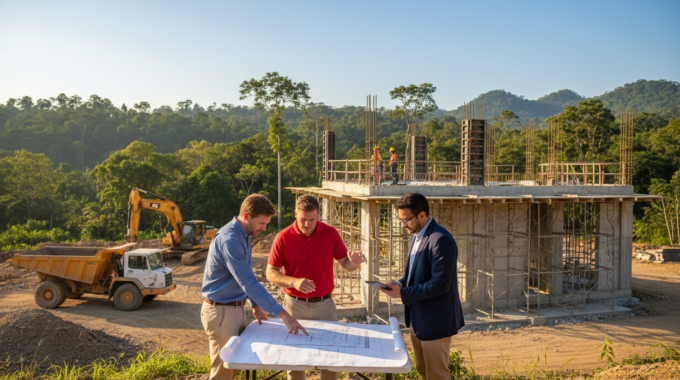
For many North American investors, the beautiful country of Costa Rica represents a unique opportunity. It’s a top destination for developing a dream home or income-generating real estate. The allure of building on your own land is powerful.
Yet, navigating the local financial landscape can be complex. That’s where we come in. At GAP Equity Loans, we provide borrower education on real estate-backed equity loans. Our focus is a transparent, documentation-driven process.
We are not legal or tax advisors. Instead, we act as your guide. We help you understand how-to-get-funding-for-a-construction-project-costa-rica by building trust with private lenders. A clear process is the foundation for success.
Whether planning a luxury home or a commercial development, understanding the Costa Rican market is key. Our mission is to bridge the gap between your property equity and the financing you need. We invite you to reach out and discuss your specific vision.
Understanding Costa Rica’s Unique Construction Landscape
Building a home in Costa Rica requires a deep understanding of its regulated professional landscape. The country offers immense appeal, but its construction market operates with specific rules and cost structures.
The appeal of Costa Rica for investors and homeowners
A stable government and welcoming attitude make this country a top choice for international investment. Many are drawn to develop custom homes and real estate projects here. This creates a vibrant market for building on your own land.
Key factors in the construction market
The Colegio Federado de Ingenieros y Arquitectos (CFIA) sets all professional fees. These construction fees typically range from 9% to 18% of the total project value.
Building costs for a high-quality home often start near $100 per square foot. This number can change based on your land’s topography and chosen finishes. The value of your investment depends on navigating these variables wisely.
We help you evaluate all construction options and potential expenses. Working with licensed professionals who know local regulations is essential for success.
Benefits of Documentation-Driven Equity Loans
The cornerstone of reliable real estate financing in this market is a transparent, document-first methodology. This approach aligns with the local financial sector, where the vast majority of activity supports housing-related projects. It also ensures compliance with laws like 8204, which mandates verification of legal income.
Our process provides a stable alternative for funding your vision. We focus on clear, organized files that demonstrate financial stability and project viability.
How our process prioritizes first-lien mortgage security
We coordinate exclusively with private lenders to secure a first-lien mortgage position on your Costa Rica property. This means your lender holds the primary claim. We do not facilitate second liens, HELOCs, or crowdfunding models.
This priority position offers greater security for the lender. For you, it translates into a more straightforward and reliable financing structure for your home or commercial build.
Importance of strong property documentation
Strong documentation is a non-negotiable requirement. It legally proves the value of your asset and satisfies stringent national standards. A complete file includes clear title, proof of equity, and detailed construction plans.
This thorough preparation is what makes our responsive GAP loan solutions in Costa so effective. We manage these complex requirements so your project stays on track.
Our structured process for securing financing follows a clear, step-by-step path designed for clarity and efficiency. We guide you from initial inquiry to funded project, managing each phase with precision.
Initial intake and document preparation
We start with a detailed intake. Here, we review your property details and the specific plan for your build. This step sets the foundation for your loan application.
Due diligence, title review, and structuring
Next, we conduct thorough due diligence. A complete title review ensures your real estate asset is clear for a first-lien mortgage.
We help prepare all documentation to meet lender requirements. This preparation helps streamline the approval phase. Financing options are then structured to align with your project’s capital needs.
Closing and lien registration considerations
The final stage involves closing and lien registration. All legal fees are accounted for in the loan structure.
Funds are disbursed according to your project’s type and end-goals. A certified expert typically values the property before final approval. While we cannot offer guarantees, this methodical approach provides a reliable path forward for your home project.
Preparing Your Property and Required Documents
A successful financing application in Costa Rica begins with a meticulously prepared property file. This upfront work is the most effective way to prevent delays. We guide you to assemble every document a lender needs to see.
Gathering essential property details and plans
Start with the core details of your asset and its intended use. You must provide your plano catastrado (the official property survey) and clarify ownership—whether held personally or through a corporation.
For a single-family home over 70 m², the local municipality requires four copies of your construction plans alongside the cadastre plot plan. A clear, detailed building plan is vital for any real estate project.
Proof of equity, tax status, and relevant permissions
Lenders require solid proof of your equity in the land. You also need current proof of tax status for the property.
Gather relevant permissions like water rights letters and any easements or rights-of-way. The municipality ensures all work complies with building regulations—securing these permits is a key step. We help you organize this entire package.
Our team manages this complex preparation, turning a pile of papers into a strong application. For a deeper dive into regulatory specifics, explore our guide on master project funding in Costa Rica. Let’s get your project moving forward.
Exploring Financing Options and Loan Structures
Your property’s equity opens doors to financing alternatives beyond conventional bank loans. We explore two primary paths to fund your build, helping you choose the structure that best fits your long-term real estate goals.
Equity loans vs. traditional home financing
Our equity loans leverage the current worth of your Costa Rica land. This is a direct alternative to traditional home financing, which often focuses on future income or credit history.
We focus on the value you already hold in your property. This provides a straightforward path to capital for your construction project.
Aligning funding with project requirements and investment value
Aligning funds means matching the loan to your actual project costs. Our standard guideline is a maximum 50% loan-to-value (LTV) ratio. This ensures your venture remains financially sustainable.
Providing stronger documentation and opting for a lower LTV significantly improves your fit for this solution. We protect your investment value by providing a clear breakdown of all associated fees—including any disbursement fee—before you commit.
Navigating Permits, Approvals, and Construction Requirements
The approval phase involves multiple government agencies that oversee construction requirements. This regulatory landscape can seem complex, but understanding it protects your investment.
We guide you through each step to ensure compliance. Your project’s success depends on securing the right permissions in the correct order.
Understanding municipal permits and regulatory bodies
Your local municipality holds ultimate authority over building requirements. You must submit your construction plan to their office for formal approval.
The Permit Reception Office streamlines this process. It houses representatives from key agencies like MOPT, INVU, ICE, and the Ministry of Health.
A municipal building inspector will visit your site periodically. They certify that work proceeds exactly according to the approved plan.
Role of architects, engineers, and technical surveys
Licensed architects and engineers conduct vital technical surveys of your land. They assess topography, soil stability, and utility access points.
These professionals ensure your design meets all local codes and standards. Their expertise is crucial for obtaining the necessary permits.
The number of agencies involved makes professional coordination essential. For projects that have already secured key approvals, explore our financiamiento shovel ready Costa Rica solutions.
By ensuring your plan meets every requirement, you protect your property’s long-term value. We help you navigate this process efficiently.
Final Insights for Moving Forward with Your Costa Rican Project
Your journey from concept to completed structure in Costa Rica culminates with decisive action. We hope this guide has provided clarity on the local real estate and financing landscape.
A successful construction project relies on a transparent process and strong documentation. Understanding the property market protects your investment’s long-term value.
Our team is ready to help you explore financing options. For a thorough review, consult our detailed due diligence checklist.
Contact us via WhatsApp at +506 4001-6413 or call 855-562-6427. Let’s discuss your vision for a home or commercial build with the security of a first-lien mortgage.
FAQ
What makes Costa Rica’s construction process different for foreign property owners?
The process here is highly documentation-driven and involves multiple local entities. Unlike simpler systems, you’ll navigate municipal permits, national college approvals for plans, and specific land use regulations. We guide you through each step—from the initial property survey to final lien registration—ensuring your project meets all Costa Rican requirements.
How does an equity loan for construction differ from a traditional bank loan in Costa Rica?
Traditional home financing here often has high barriers for non-residents, including extensive income proof and complex approval. Our equity loan alternative uses your property’s existing value as the primary collateral. This focuses on strong land title documentation and your equity position, creating a more accessible path to funding your build or renovation investment.
What property documents are absolutely required to start the funding process?
A> You’ll need a clear copy of your registered deed (escritura), your property’s up-to-date tax status (catastro), and a recent survey map (plano catastrado). If you have architectural plans, those are also crucial. This documentation proves your ownership, equity, and that the land is ready for development, forming the foundation for our due diligence.
Who handles the permit approvals with the municipality and other agencies?
While your local architect or engineer typically submits the construction plan for technical approval, our role is to ensure your property’s legal and financial profile supports the funding. We coordinate between your documentation, the notary public, and the National Registry to secure the first-lien mortgage, which is a separate but parallel process to building permits.
What are the typical costs and fees involved in this type of funding?
Beyond the loan itself, you should plan for closing costs. These include notary fees, National Registry fees for the lien registration, and legal representation. We provide transparent fee schedules upfront. There are also municipal costs for your building permits and professional fees for your architect, which are separate from the financing process.
How long does the entire funding process typically take?
The timeline varies, but a standard equity loan process from intake to closing can take several weeks. The speed depends on how quickly we receive your documents, the complexity of the title review, and the current workload at the National Registry. Having your property paperwork in order from day one significantly accelerates the process.
Can I use this funding for any type of construction project?
Yes, this financing alternative is designed for various projects—from building a new home, adding a major addition, to undertaking a renovation that increases your property’s value. The key is that the project should be well-defined, and the loan amount must align with the equity available in your land or existing structure.
Article by Glenn Tellier (Founder of CRIE and Grupo Gap)
Understand what-loan-to-value-means-costa-rica with our guide. We help you secure first-lien equity loans through a clear, documentation-driven process.
Need real-estate-lending-opportunities-outside-traditional-markets? We provide clear guidance on Costa Rica equity loans. Contact us at gapequityloans.com.
Understand how-private-lending-works-costa-rica. We guide you through our documentation-driven process for first-lien mortgages. Contact us at 855-562-6427.