

Understand what-loan-to-value-means-costa-rica with our guide. We help you secure first-lien equity loans through a clear, documentation-driven process.
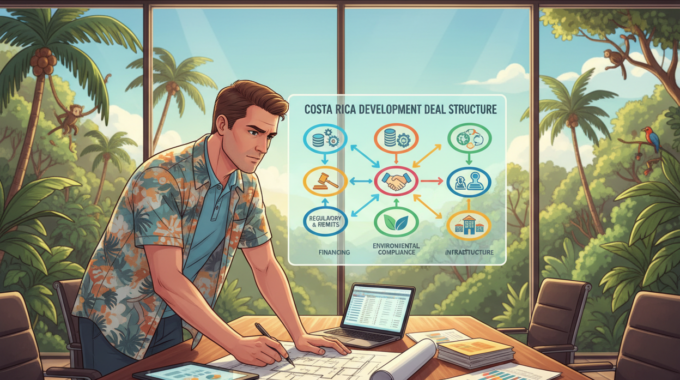
How to Structure a Development Deal in Costa Rica
Costa Rica attracts developers and investors from across the globe. Its natural beauty is matched by a legal framework designed for investor protection. This combination creates a premier destination for international capital seeking stable, high-quality opportunities.
We provide this guide to help you navigate the complexities of launching a project here. A structured approach is not just helpful—it’s essential. It ensures every phase meets local regulatory standards and aligns with your personal financial goals.
Our focus is on the essential steps required for success. By following a clear process, you mitigate common pitfalls. This positions your venture for long-term success in a competitive real estate market.
Introduction to Structuring a Development Deal in Costa Rica

A strong tourism sector provides the bedrock for Costa Rica’s dynamic real estate landscape. Over three million visitors arrive each year, creating consistent demand. This environment supports both residential and commercial projects.
Understanding the Costa Rican Real Estate Market
We see foreign investment as a key market driver. Relocations from North America and Europe continue to grow steadily. This fuels demand for high-quality development projects across the country.
The market is active but also well-defined. Its stability comes from transparent property laws. This framework protects owners and creates a secure foundation for investment.
Setting Realistic Expectations in Development
Realistic planning requires understanding local constraints. Strict zoning laws are a prime example. These rules protect the long-term value of your project and the nation’s natural beauty.
Experienced investors appreciate this balance. The regulatory environment ensures sustainable growth. We guide you through these nuances to align your vision with local requirements.
Success here is built on this understanding. It turns potential challenges into advantages for your development.
Understanding GAP Equity Loans and the Costa Rica Advantage

GAP Equity Loans offers a distinct approach to real estate financing that leverages the stability of the Costa Rican market. We provide education on using property equity to fund your projects. This turns your asset into a tool for growth within a secure investment environment.
Our method is built on transparency and a clear process. We help you understand your options without complex jargon.
Documentation-Driven Process Explained
We specialize in a documentation-driven process. This means we focus on preparing a complete file from the start. Strong paperwork includes your property survey, ownership records, and proof of equity.
This thorough approach saves time and increases approval chances. Our guideline is a maximum 50% loan-to-value ratio. A lower LTV with stronger documents creates an ideal fit for our private lending partners.
Working with a Private Lender for First-Lien Mortgages
We coordinate directly with private lenders. Upon approval, the lender secures a first-lien mortgage on your property. There are no second liens, which protects your primary ownership position.
This structure is designed for serious investors in the Costa Rica development scene. We do not offer HELOCs or crowdfunding. For more tailored options, explore our guide to personal loans for urgent needs in Costa.
Ready to discuss your project? Contact us via WhatsApp at +506 4001-6413.
Navigating Real Estate Documentation and Loan Preparation
Organizing your documentation is the critical first step in unlocking equity for your development plans. This phase builds a lender’s confidence by providing a transparent view of the asset and your commitment. We assist you in compiling these records to meet our partners’ professional standards.
Essential Property Details and Ownership Records
Your application starts with the property itself. You must provide the official survey, known as the plano catastrado, and current water letters from local providers. These documents establish the asset’s boundaries and utility access.
We also need clear records of your ownership structure. This means specifying if the title is held in a personal name or through a Costa Rica corporation. Clarity here streamlines the entire process for all investors.
Compiling Required Proof of Equity and Legal IDs
Proof of equity demonstrates your vested stake in the project. It is a cornerstone of our documentation-driven approach and directly supports the loan-to-value assessment. This evidence is non-negotiable for real estate investment applicants.
Finally, valid legal identification and contact details for all involved parties are mandatory. Having these items prepared from the outset is the best way to save time. It ensures a smooth transition from application intake toward closing.
Inside the Development Deal Process: From Intake to Lien Registration
Every successful real estate venture here begins with a meticulous intake and moves systematically toward completion. We map this journey for you to demystify each phase.
Our structured approach saves you time and reduces uncertainty. It turns a complex development process into a clear sequence of actions.
Step-by-Step Journey of a Development Deal
We start with your initial intake and document collection. This is followed by a thorough review of your paperwork.
Next, we conduct comprehensive due diligence and a title review. This step verifies the legal standing of the property.
Once cleared, we move to structuring the financing terms. This aligns the loan with your specific project goals.
The final stages involve the formal closing and official lien registration. This secures the lender’s first-lien mortgage on record.
Importance of Due Diligence and Title Review
A rigorous title review is the most critical step. It protects your investment from unforeseen legal encumbrances in Costa Rica.
We leave no stone unturned during this phase. Our goal is to ensure your asset is free of any hidden claims.
This diligence provides peace of mind for all investors. It forms the secure foundation for the entire development.
We maintain a casual, professional approach throughout this journey. Our team works to ensure you feel comfortable and fully informed at every step.
how-to-structure-a-development-deal-costa-rica: Essential Steps for Success
The journey from loan approval to final closing defines the success of your development. Hitting each key milestone keeps your project on schedule and within budget.
We help you track these phases. This ensures your real estate investment aligns with your financial plan from start to finish.
Key Milestones from Approval to Closing
Formal loan approval is your first major checkpoint. It confirms the funding is secured for your venture.
Next, we finalize all documentation. This includes property surveys and legal IDs for a smooth process.
Due diligence and title review follow. This step protects your investment in the Costa Rica market.
The final milestone is the closing and lien registration. It legally secures the financing and completes the deal.
By focusing on these steps, you avoid common delays. Our guidance lets you concentrate on building. For a deeper dive into funding logistics, review our guide on master project funding in Costa Rica.
We are committed to your success. We manage the complexities so you can lead the creative vision.
Selecting the Right Development Site in Costa Rica
Site selection goes beyond finding a beautiful piece of land. It’s about ensuring the property can legally and practically support your vision. We help you analyze key factors that determine long-term viability and value.
Always prioritize fee simple titled property. This provides you with full ownership and transfer rights. It’s the most secure foundation for any project.
Evaluating Land Classification and Utility Access
Check the land’s official zoning classification first. This dictates what you can build. Next, confirm utility access is not just promised but documented.
You must obtain a valid water letter from the local ASADA or AYA provider. This proves legal water access for your development. In rural areas, look for larger parcels that can be subdivided into 5,000 or 7,000 square meter lots. This can reduce your initial subdivision costs.
Assessing Infrastructure and Environmental Factors
Modern buyers expect reliable infrastructure. Assess road quality and confirm fiber-optic internet availability. These features directly impact your project’s market appeal.
Hire a qualified topographer to evaluate the land’s physical characteristics. They will assess slope stability and drainage patterns. This step ensures the site is physically apt for construction and protects your investment.
A thorough site assessment is your first step toward a successful real estate venture. It aligns your vision with the practical realities of the market.
Reviewing Legal and Permitting Requirements for Development
Lic. Jorge Montero B., an attorney with over 30 years of experience, stresses that thorough legal verification is paramount. Your project’s success depends on mastering two key areas: local municipal approvals and national environmental compliance.
Navigating Zoning and Municipal Regulations
First, you must confirm your land’s intended use aligns with local law. This requires a certificate of uso de suelo from the municipality. It officially authorizes your planned development type.
Environmental approval is also mandatory. The national agency SETENA will require a D1 or D2 environmental impact study. This step ensures your project meets the country’s high sustainability standards.
Understanding Title Searches and Survey Plans
A clear property title is non-negotiable. We coordinate with professionals to conduct a full search at the National Registry. This confirms there are no hidden liens or ownership disputes.
For condominium projects, you must establish a legal regime under the Ley de Condominios. This defines governance and shared service rules for future owners.
We ensure your legal and permitting goals are met by managing this intricate process. This protects your real estate investment and aligns your venture with market expectations.
Aligning Your Project with Market Demand and Buyer Expectations
Your project’s success hinges on its ability to meet the specific expectations of today’s property seekers. We help you translate broad market trends into concrete design choices. This alignment is what maximizes your investment potential.
Tailoring Product Design to Diverse Buyer Groups
Start by understanding who your buyers are. Wellness-focused relocators seek tranquility and health-oriented spaces. Short-term investors prioritize rental income and flexibility.
Many developers see strong demand for two-bedroom units with lock-off suites. This design provides excellent rental flexibility. It allows owners to generate income from a portion of their property.
Incorporating Modern Amenities and Sustainable Features
International buyers expect modern conveniences. Co-working areas and EV charging stations are now standard requests. These features significantly boost your project’s appeal.
Sustainable design aligns with broader environmental goals in Costa Rica. Consider native landscaping and greywater recycling systems. These elements resonate deeply with the market and support long-term value.
We analyze these trends to keep your project competitive. For financial support tailored to these goals, explore our home equity loan support options. This ensures your vision meets both market demand and your personal financial objectives.
Financial Modelling and Funding Your Development Project
Financial modeling transforms your vision into a quantifiable plan. It guides every decision from funding to completion. A solid model is your roadmap for success in this market.
Conducting a Feasibility Study and Market Analysis
A professional feasibility study is essential. It validates your project’s potential return. Well-structured ventures here can achieve internal rates of return between 15% and 25%.
Your model must include all acquisition costs. Remember the 1.5% property transfer tax. Also account for the annual 0.25% property tax on the registered value.
Structuring Debt and Equity for Optimal LTV
We assist you in structuring debt and equity. Our goal is to maintain an optimal loan-to-value ratio. This makes your project attractive to private lenders.
If you plan to retain units, factor in a 5% to 8% annual rental yield. This provides long-term income after construction. Our support helps identify the minimum pre-sale threshold needed to secure your funding.
Building Sustainable and Durable Developments in Costa Rica
Building for longevity means selecting materials and designs suited to tropical conditions. This approach protects your financial stake and meets rising buyer expectations. We focus on methods that ensure your project stands the test of time.
Designing for the Tropical Climate
Your choice of materials is critical. We recommend using 316-grade stainless steel and treated hardwoods. These resist corrosion and moisture damage from the humid environment.
Smart design also reduces long-term costs. Maximize cross-ventilation and natural light in your plans. This creates comfortable living spaces while lowering energy bills.
Implementing Green and Resilient Construction Practices
Resilient construction is non-negotiable. Strict adherence to seismic building codes safeguards your real estate investment. This is a fundamental part of responsible building here.
Integrating green technology boosts appeal. Solar photovoltaic panels with battery systems attract environmentally conscious buyers. These features enhance the sustainability of your entire development.
Our team provides insights into these proven practices. We ensure your project is built to last and maintains its value for years. This protects your investment in a competitive market.
Finishing Touches and Next Steps for Your Development Deal
With a clear roadmap now in hand, the final phase involves preparation and partnership. We have outlined the essential steps, from site selection to securing the right financing for your project.
Remember, success in the Costa Rica market depends on aligning your product design with the needs of your target buyers. This alignment is what turns a good project into a great one.
By maintaining a documentation-driven approach and working with experienced professionals, you can navigate the complexities of your real estate investment with confidence. This is how savvy investors like you build a secure foundation.
We invite you to reach out to our team at GAP Equity Loans. Let’s discuss how we can support your next venture and help you move from plan to action.
The bottom line is clear. With the right structure and a detailed plan, you can achieve your goals in Costa Rica. You can build a lasting legacy through a successful real estate development.
FAQ
What makes Costa Rica an attractive market for real estate development?
Costa Rica offers a stable political climate, a growing economy, and consistent demand from international buyers seeking a second home or investment property. The North Pacific region, including areas like Playa Flamingo, is particularly popular. Success hinges on understanding local buyer preferences, environmental regulations, and building sustainably for the tropical climate.
How does working with a private lender, like GAP Equity Loans, differ from a traditional bank for development financing?
Traditional banks in Costa Rica can be slow and rigid for developers. We focus on a documentation-driven process, using your property’s equity as collateral for a first-lien mortgage. This approach is often faster and more flexible, focusing on the asset’s value and your proof of ownership rather than complex income verification.
What are the most critical early steps when structuring a development deal?
The foundation is thorough due diligence. This means securing a clean property title, understanding the land’s zoning and classification, and confirming access to utilities. Next, a solid feasibility study that aligns your project’s design with proven market demand is essential for attracting buyers and securing funding.
What are common legal or permitting hurdles for new developments?
A> Key hurdles involve navigating municipal zoning regulations, obtaining construction permits from the local municipality and the Colegio Federado de Ingenieros y de Arquitectos (CFIA), and ensuring your survey plan is registered and accurate. Environmental feasibility studies are also often required. Working with a trusted local attorney is non-negotiable.
How important is sustainable design in Costa Rican real estate?
It’s a major value driver. Buyers increasingly seek homes built with resilience in mind—using materials that withstand humidity, incorporating natural ventilation, and featuring water-saving systems. Sustainable features aren’t just eco-friendly; they reduce long-term maintenance costs and appeal directly to your target market.
What should a financial model for a development project include?
A robust model projects all hard and soft costs—from land acquisition and construction to permits, sales marketing, and legal fees. It also forecasts sales timelines and prices based on a market analysis. The goal is to structure your debt and equity to maintain a healthy loan-to-value (LTV) ratio and ensure project viability from start to finish.
Why is local expertise so crucial for a development’s success?
Local partners—including realtors, attorneys, architects, and builders—provide irreplaceable knowledge. They understand community dynamics, builder reputations, permit timelines, and buyer expectations. Their expertise helps you avoid costly mistakes, streamline the process, and create a product that truly resonates in the Costa Rican market.
Article by Glenn Tellier (Founder of CRIE and Grupo Gap)
Sign up to start your loan today!
Related Posts:
Related Posts