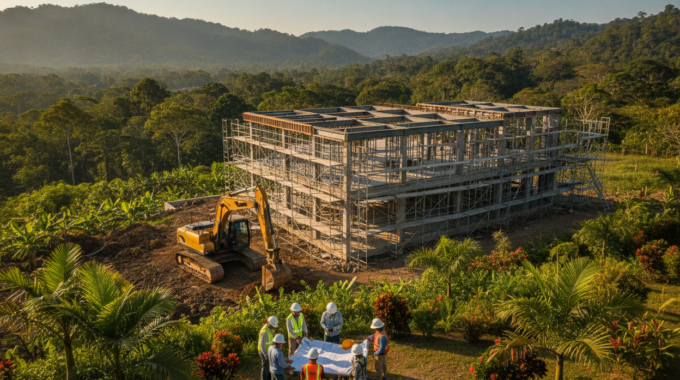
Building your dream home in Costa Rica can be an exciting journey. However, understanding the financial aspects is crucial. That’s where construction loans come into play. These short-term financial tools are specifically designed to help you fund the building of a new home or a major renovation.
At GAP Equity Loans, we provide valuable insights into how construction loans function within Costa Rica’s unique real estate market. Our focus is on offering private, property-backed financing options. Unlike traditional bank products, our loans do not involve standard mortgage terms. Instead, we aim to simplify the construction process for you.
Before you break ground, it’s essential to grasp the entire loan process. Our team is here to guide you through every step, ensuring your project aligns with the requirements of private lenders in the region. With careful planning and the right financial support, your dream home can become a reality.
Understanding Construction Loans in Costa Rica
Embarking on the journey of home construction in Costa Rica can be both thrilling and challenging. Understanding the financial tools available is essential. A construction loan is tailored specifically for the building phase of your residential project.
Typically, the construction phase lasts between 12 and 18 months. During this time, you may only need to make interest-only payments on the drawn balance. This feature sets construction loans apart from traditional mortgages.
We provide private financing options that differ from standard bank loans. Many borrowers often have questions about how home construction financing works compared to permanent loans or home equity lines. Our unique, short-term financing supports your project without the long-term constraints of a 30-year mortgage.
The Role of GAP Equity Loans in Your Construction Project
In Costa Rica, the process of building a home combines excitement with a series of important decisions. At GAP Equity Loans, we act as a bridge, connecting qualified borrowers with private lenders who specialize in property-backed financing.
While we are not the direct lender, our role is crucial in ensuring your construction project has the necessary capital. We focus on the property itself, verifying that the title is clear and the collateral meets the requested loan amount.
Our network of private lenders evaluates projects based on the land’s value and the construction plans. This approach differs from a traditional mortgage, which often relies on broader financial metrics.
We help you navigate the process of securing funds for your new home, ensuring all legal documentation is in order. Proper title verification is essential, protecting both the borrower and the lender.
Evaluating Property Value and Loan-to-Value Ratios
When planning to build in Costa Rica, evaluating your property’s worth is a key step. Understanding the loan-to-value (LTV) ratio is essential for securing a construction loan. This ratio helps lenders assess the risk associated with your project.
We require a professional evaluation of your property to ensure that the collateral is sufficient to support the requested loan amount. A 20% equity position is often necessary, providing lenders with confidence in your construction project’s viability.
Our process involves a thorough review of the land value and the projected value of the home once construction is complete. Accurate appraisals are vital for determining the maximum loan amount available for your specific building project.
We do not provide instant cash; every loan must be backed by solid property valuation and clear title documentation. By focusing on property value, we ensure that financing remains sustainable for both the borrower and the private lender.
You can contact our team in the USA/Canada at (855)-562-6427 to learn more about how we evaluate property for financing.
Developing a Comprehensive Repayment Plan
Creating a solid repayment strategy is vital for the success of your construction project. A clear repayment plan ensures that you can meet your obligations as the project progresses.
We coordinate with private lenders to align funding disbursements with specific construction milestones, such as foundation or framing completion. Each payment release is subject to an inspection to verify that the work has been completed according to the building plans.
Our repayment structures are designed to be flexible, reflecting the short-term nature of private, property-backed financing in Costa Rica. You must demonstrate a realistic plan for how the loan will be repaid, whether through the sale of the property or other means.
By managing the budget and disbursements carefully, you ensure that the project stays on track and within the agreed financial limits. We do not offer debt consolidation or foreclosure rescue, so your repayment plan must be specific to the construction project itself.
Contact us at info@gap.cr to discuss how to structure a repayment plan that fits your unique construction timeline.
Navigating Permits, Titles, and Liens
Navigating the complexities of construction in Costa Rica requires careful attention to permits and legalities. Securing the necessary permits is a mandatory requirement for any construction project we facilitate in the Costa Rican market.
We conduct a rigorous review of the property title to ensure there are no existing liens that could jeopardize the loan. A clean title is the foundation of our property-backed financing, providing security for the private lender involved in your project.
If there are outstanding liens on the property, these must be addressed before we can proceed with any construction loan funding. Our team helps you understand the legal implications of title and lien status, ensuring your project remains compliant with local laws.
We emphasize that all building permits must be current and valid to avoid delays in the disbursement of your construction funds. Navigating these legal requirements is a critical part of the process, and we are here to guide you through every step.
Proper documentation of your title and permits is essential for maintaining the integrity of your construction loan agreement.
Ensuring Your Property Supports the Loan Request
Assessing your property’s potential is crucial when seeking a construction loan. We evaluate whether your land has the necessary characteristics to serve as collateral for a private construction loan.
The location, size, and potential market value of your land are key factors in determining if it supports your loan request. Our lenders prefer properties that are marketable and free of significant legal encumbrances that could hinder a future sale.
While we do not guarantee funding, the final decision depends on whether the property meets the specific criteria of our private lenders. Providing detailed information about the property, including surveys and site plans, will help us assess its suitability.
If your property does not meet our requirements, we will offer clear feedback on steps you might take to improve its standing. Our goal is to ensure that the loan is backed by a solid asset, protecting the interests of all parties involved in the transaction.
By verifying that your property supports the loan request early on, we can streamline the entire financing process for you.
Securing construction-loans: A Step-by-Step Guide
Securing financing for your new home in Costa Rica requires careful preparation. The first step is to gather all necessary documentation. This includes detailed building plans and contractor agreements.
We recommend using the National Association of Home Builders (NAHB) online directory to find a reputable builder who meets the standards required for your project. Additionally, you must provide proof of ownership and clear title documentation as part of the initial application process.
While we do not promise approval, having a complete and organized file significantly improves your chances with our private lenders. We will review your construction plans to ensure they align with your established budget.
Gathering all required approvals from local authorities is a mandatory step before any funds can be disbursed for your home. Our team assists you in preparing the necessary paperwork to ensure that your application is as strong as possible.
Following this step-by-step guide will help you navigate the complexities of securing financing for your new home construction.
Conducting Lender Due Diligence and Meeting Requirements
A successful home construction project in Costa Rica hinges on comprehensive due diligence and preparation. This process is essential to verify the legal status of your property and the validity of your permits.
We ensure that all legal documentation is current, which is a requirement for any private lender involved in your project. Our team conducts a thorough review of the builder’s credentials to confirm they have the necessary experience to complete your home.
Additionally, we verify that all property taxes are paid and that there are no outstanding legal issues that could affect the loan. Meeting these requirements is crucial for maintaining the trust of our private lenders and ensuring your project’s success.
While we do not guarantee funding, our rigorous due diligence process protects all parties involved. By being proactive with your documentation, you can help us complete this process in a timely manner.
Our commitment to transparency means we will keep you informed throughout every stage of the lender’s review process.
Strategies for Cost Management and Budgeting Your Construction Project
Managing costs effectively is essential for any construction project in Costa Rica. It ensures that you stay within the budget established with your contractor. We assist you in estimating both construction and closing costs to provide a clear picture of your total financial commitment.
Implementing innovative budgeting approaches can help handle unexpected expenses during the building phase. For instance, setting aside a contingency fund is a wise strategy. Collaborating closely with your builder allows you to create a detailed cost breakdown that accounts for all materials and labor.
Our team offers guidance on managing your money effectively throughout the duration of the construction loan. Understanding the impact of closing costs is crucial, as these are separate from the actual construction expenses of your home. We encourage regular budget reviews to ensure you do not overextend your financial resources.
By maintaining a disciplined approach to your budget, you increase the likelihood of completing your project successfully and on time.
Wrapping Up Your Construction Loan Journey
Completing your construction loan journey requires careful coordination and a commitment to your original building plans. We are proud to have supported your project and hope this guide has clarified how our private financing options work.
If you have further questions, please contact us at info@gap.cr or call our USA/Canada line at (855)-562-6427. Remember that successful construction depends on the strength of your team, including your builder and financial partners.
We wish you the best as you finalize your home and move into the next phase of your property ownership in Costa Rica. For additional banking inquiries, you may contact U.S. Bank at 800-872-2657 or TD Bank at 1-866-325-4516 for their respective services.
Thank you for choosing to explore your construction financing options with our dedicated team of professionals.
FAQ
What is a construction loan?
A construction loan is a short-term loan specifically designed to finance the building or renovation of a home. Unlike traditional mortgages, these loans are disbursed in stages as the construction progresses, allowing for better management of cash flow throughout the project.
How do we qualify for a construction loan?
To qualify for a construction loan, we typically need a solid credit score, a detailed construction plan, and a reliable budget. Lenders will also assess our income and financial history to determine our ability to repay the loan.
What are the different types of construction loans available?
There are several types of construction loans, including traditional construction loans, renovation loans, and permanent loans. Each type serves different needs, whether we’re building a new home or renovating an existing property.
How is the loan amount determined?
The loan amount is generally based on the estimated cost of the construction project, including materials, labor, and any additional expenses. Lenders may also consider the property’s appraised value to determine the final loan amount.
What are the typical interest rates for construction loans?
Interest rates for construction loans can vary based on the lender, our creditworthiness, and market conditions. Generally, these rates are higher than traditional mortgage rates due to the increased risk associated with construction financing.
How do we manage payments during the construction process?
Payments for construction loans are typically made in installments, known as draws. As we reach specific milestones in the construction process, we can request these draws to cover ongoing costs, ensuring that we have the necessary funds at each stage.
What should we consider when budgeting for a construction project?
When budgeting for a construction project, we should account for not only the direct costs of materials and labor but also potential closing costs, permits, and any unexpected expenses that may arise during the build.
How do we navigate permits and legal requirements?
Navigating permits and legal requirements involves researching local regulations and ensuring that all necessary permits are obtained before starting construction. We may need to work closely with our contractor and local authorities to ensure compliance.
What role does a contractor play in the construction loan process?
A contractor plays a crucial role in the construction loan process by providing estimates, managing the construction schedule, and ensuring that the project stays within budget. Their expertise helps us align our financial plans with the construction timeline.
Can we use a construction loan for renovations?
Yes, we can use a construction loan for renovations. Renovation loans are specifically designed to finance improvements to an existing property, allowing us to upgrade our home while managing the associated costs effectively.
Article by Glenn Tellier (Founder of CRIE and Grupo Gap)