Costa Rica, known for its stunning biodiversity, faces unique challenges in development projects. Covering only 0.03% of the world’s land, it houses 6% of global biodiversity. This rich environment demands careful consideration, especially regarding water resources.
Water availability plays a crucial role in project success. With over 97.8% of the population having access to clean water, the country has made significant strides. However, the shifting climate and water scarcity present ongoing challenges. These factors can affect everything from site selection to long-term operational viability.
In our analysis, we explore how water quality and availability impact construction projects across various regions. Understanding these risks is vital for any investor or developer looking to navigate Costa Rica’s regulatory and environmental landscape effectively.
Understanding Water Risk in Costa Rica
In Costa Rica, the interplay of water availability and urban growth presents unique challenges. With a population exceeding 5 million, the country must effectively manage its extensive water network. Urban and rural demands often clash, leading to potential water shortages.
Additionally, unsustainable land use practices threaten the long-term security of these vital resources. For developers, this creates a profound impact on local construction projects. Water availability frequently dictates the density and scale of new developments.
While Costa Rica has made significant progress, the pressure from urban growth continues to strain existing water infrastructure. Aligning projects with local water availability is essential for mitigating development risks in this region.
The Role of Water in Sustainable Costa Rican Development
Water plays a pivotal role in shaping sustainable development strategies in Costa Rica. The country has made remarkable strides, generating over 99% of its electricity from renewable resources as of 2019. This commitment highlights the integration of environmental stewardship into national development.
As we analyze Costa Rica’s approach, it becomes clear that balancing modern infrastructure services with the preservation of biodiversity is crucial. The country’s rich ecosystems must be safeguarded while meeting the demands of a growing population.
Sustainable development requires a comprehensive understanding of how water resources support both the economy and the environment. Our team emphasizes that infrastructure projects must include effective water management strategies. By linking biodiversity with infrastructure needs, developers can ensure projects contribute positively to the local environment.
National Adaptation Strategies and Water Resource Management
Costa Rica’s future hinges on how we manage our precious water resources. The Reventazón River basin plays a critical role in this management. It supplies 23% of the drinking water for the Greater Metropolitan Area. This basin is also vital for agricultural production and energy generation.
Government initiatives, such as the National Climate Change Adaptation Plan 2022-2026, are essential. These plans aim to enhance the resilience of our society and agricultural practices against climate change. By focusing on sustainable water management, we can safeguard our resources.
We also look at case studies from the Reventazón basin. This area supports 85% of national vegetable production, emphasizing the need for effective water management. Adaptation strategies are crucial to protect these resources, which sustain both the economy and local communities.
Navigating Water Quality and Availability in a Changing Climate
Navigating the complexities of water quality and availability is vital for development in Costa Rica. Maintaining high water quality is a priority. The country operates 2,145 aqueducts to supply drinking water to various communities.
Approximately 92% of the rural population is connected to public water supply systems. This reflects significant progress in service distribution. However, ensuring consistent water quality remains a challenge.
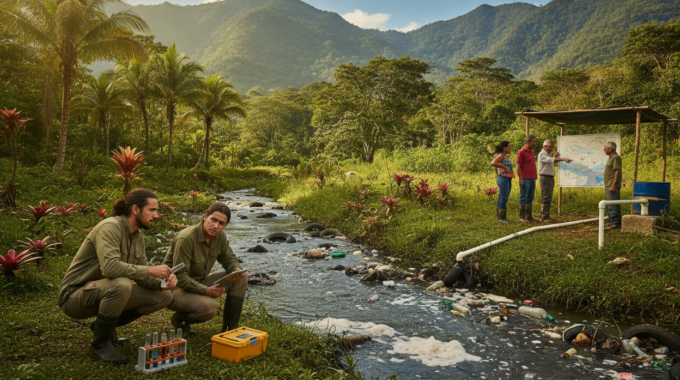
Surface water sources are often susceptible to contamination from agricultural and industrial runoff. Developers must verify that their projects have access to reliable drinking water systems. These systems must meet the rigorous standards set by national authorities.
Our guide helps you navigate the complexities of water availability. This ensures your project remains compliant with local quality and safety regulations.
How Climate Change is Reshaping Water Patterns and Agriculture
The evolving climate is dramatically altering water distribution and agricultural practices in Costa Rica. These changes are critical as they directly impact food production and water availability.
Climate change is actively reshaping rainfall patterns, leading to a water deficit of up to 30% in certain mountainous sectors of the country. Droughts are becoming more frequent, affecting agricultural production significantly.
To combat these challenges, the government plans to build approximately 100 reservoirs on agricultural farms over the next three years. This initiative aims to improve water management practices and ensure efficient irrigation.
Currently, 1,430 hectares are already utilizing efficient irrigation systems. These efforts reflect how the agricultural sector is adapting to the uncertainty caused by shifting precipitation cycles.
As we analyze these developments, it is clear that resilient agricultural practices are essential for maintaining food security. With water availability becoming increasingly unpredictable, new strategies for water use are vital, especially in areas where agriculture is the primary economic driver.
Integrating Water Supply, Sanitation, and Community Health
The management of water supply and sanitation systems is crucial for community health in Costa Rica. However, significant challenges persist in ensuring effective wastewater management.
Currently, only 14% of the population connected to sewage systems receives proper treatment for their wastewater. This shortfall highlights the urgent need for improvements in sanitation infrastructure.
Approximately 75.4% of the population relies on septic tanks, which can pose health risks if not managed correctly. Our analysis reveals that 1,498 ASADAs are responsible for providing essential water supply and sanitation services to rural communities, covering about 25.5% of the population.
Improving service distribution requires a coordinated effort to upgrade existing wastewater systems. By ensuring they meet modern environmental standards, we can protect community health and support sustainable development.
Securing Construction Project Financing with Private Lending
Financing construction projects in Costa Rica requires a keen understanding of private lending dynamics. We recognize that private lenders focus on specific factors when considering loan applications. Key among these is the loan-to-value ratio and the clear status of the property title.
Understanding these elements is essential for a successful project. Proper due diligence ensures that all necessary permits are secured and that no undisclosed liens exist on the land. This process protects both the lender and the borrower.
Moreover, the value of your property plays a critical role in supporting the loan request. We help clarify how potential water-related costs can impact project viability. Private lenders also demand a comprehensive repayment plan that addresses the unique risks of construction in Costa Rica.
Transparency regarding property value and legal standing is vital. Our guidance ensures that you navigate the lending process smoothly, paving the way for successful project financing.
Water resource management is a key concern that influences the success of construction projects in Costa Rica. Several factors contribute to the challenges faced by developers in this area. The country has a significant fiscal deficit, which hampers environmental protection efforts. This often leads to inadequate resource management practices.
To address these issues, we recommend conducting thorough hydrological studies. These studies can help identify sustainable water management practices throughout the project lifecycle. Additionally, understanding the regulatory landscape is crucial for developers. This knowledge allows for the implementation of proactive strategies to protect essential water resources.
By taking the lead in water management, private developers can navigate the complexities of the local environment. Our analysis provides a roadmap for overcoming these challenges, ensuring that projects remain resilient in a changing climate.
Best Practices for Water Management in Costa Rican Construction
Effective water management is essential for the success of construction projects in Costa Rica. Adhering to local regulations and obtaining necessary water concessions is critical. The Ministry of Environment and Energy (MINAE) has granted 1,240 concessions for exploiting surface and groundwater for agricultural use. This indicates a rigorous permitting process that developers must navigate.
Moreover, the water resource protection tariff plays a significant role. This tariff funds activities aimed at protecting, restoring, and improving aquifer-related ecosystems. Developers should prioritize the protection of water sources by implementing sustainable construction practices that minimize impacts on local watersheds.
To ensure compliance, our guide outlines essential steps for securing permits. This will help you align your project with national water management standards and contribute positively to the environment.
Utilizing GAP Equity Loans for Property-Backed Project Funding
Short-term financing options are essential for developers in Costa Rica to ensure project success. GAP Equity Loans provides a pathway for borrowers to secure private property-backed financing. This approach uses real estate as collateral, offering a flexible solution tailored to the local market.
These loans require a thorough assessment of the land value and the overall feasibility of the project. Over the last three years, the demand for such financing has increased as developers face unique challenges. GAP acts as a coordinator, connecting qualified borrowers with private lenders to facilitate this process.
It’s important to note that GAP is not a direct lender. Instead, we ensure that the property supports the loan request effectively. For more information, contact GAP at www.gapequityloans.com, WhatsApp +(506)-4001-6413, USA/Canada (855)-562-6427, or email info@gap.cr.
Overcoming Regulatory and Financial Hurdles in Costa Rican Projects
Successfully managing regulatory and financial obstacles is vital for developers aiming to thrive in Costa Rica’s construction sector. The intricate nature of water management regulations requires careful navigation to ensure compliance.
Overcoming regulatory hurdles necessitates the submission of detailed hydrological and socioeconomic data to support your project’s water management plan. We focus on the specific needs of the watersheds where your project is located to streamline the permitting process.
Lender due diligence is a critical step. Private lenders will verify that all permits are in order and that the property title is clear of any liens. By providing accurate data, developers can demonstrate the long-term viability of their projects to potential private lenders and regulatory bodies.
Our team provides the insights needed to manage these financial and regulatory challenges, ensuring your project remains on track for success.
Final Reflections on Water Challenges and Sustainable Development in Costa Rica
Water management stands at the forefront of sustainable development in Costa Rica. We have explored the critical role of water in the sustainable development of Costa Rica and the risks it poses to new projects.
Protecting water resources is essential for the well-being of the people and the long-term success of the country’s economic initiatives. Developers must remain vigilant, ensuring that their projects contribute to the sustainable development goals that define the nation’s future.
By integrating water management and responsible financing, we can overcome the challenges that currently face the construction industry in this region. We hope this guide provides the clarity needed to navigate the complexities of water risk and achieve your development goals in Costa Rica.
FAQ
What are the main water challenges in Costa Rica?
The primary water challenges include limited access to clean drinking water, pollution of water sources, and inadequate wastewater management. These issues impact communities and development projects across the country.
How does water quality affect construction projects?
Poor water quality can lead to delays in construction, increased costs, and potential health risks for workers. Ensuring that water meets safety standards is crucial for the success of any development project.
What strategies can be implemented to manage water resources effectively?
Effective strategies include implementing sustainable water management practices, improving infrastructure for water supply and sanitation, and promoting community involvement in water resource management.
How does climate change impact water availability in Costa Rica?
Climate change leads to altered rainfall patterns, increased drought frequency, and extreme weather events, all of which significantly affect water availability for both communities and agricultural needs.
What role does the government play in water management?
The government is responsible for creating policies, implementing regulations, and funding initiatives aimed at improving water quality and availability. Their efforts are vital for sustainable development in the region.
How can communities contribute to better water management?
Communities can engage in local water management practices, advocate for sustainable policies, and participate in educational programs that promote water conservation and protection of local watersheds.
What are the implications of inadequate wastewater management?
Inadequate wastewater management can lead to environmental degradation, health hazards, and increased costs for communities. It is essential to develop effective systems to manage wastewater to protect public health and the environment.
What financing options are available for water-related projects?
Financing options include private lending, government grants, and equity loans. Understanding the financial landscape is crucial for securing funding for water infrastructure projects.
How can we ensure access to clean drinking water for all?
Ensuring access requires a multi-faceted approach, including investment in infrastructure, community education, and policies that prioritize water equity and sustainability.
What best practices should be followed in construction projects regarding water management?
Best practices include adhering to local regulations, conducting thorough assessments of water resources, and implementing sustainable construction methods that minimize water use and protect local ecosystems.
Article by Glenn Tellier (Founder of CRIE and Grupo Gap)