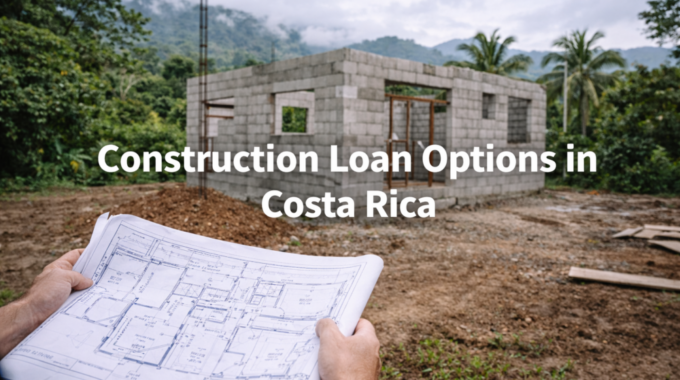
Construction financing in Costa Rica can work well when the deal is structured conservatively and the documentation sequence is treated as part of the underwriting. The most common problems are not “interest rate problems.” They are timeline, scope, and verification problems that appear when key items are assumed instead of confirmed.
This article explains how construction loan options are typically structured, what private lenders usually want to see before approving terms, and how borrowers can build a lender-ready file that reduces preventable delays and rework.
What Construction Financing Typically Means in Costa Rica
Construction financing is usually designed to fund a defined build scope over a defined timeline, with funds released in stages as work is completed and verified. The structure is less about “getting money quickly” and more about matching capital to measurable progress so risk is controlled on both sides.
In practice, construction loans can vary widely based on the borrower profile, the project type, the collateral position, and how complete the documentation is at the time underwriting begins. A lender-ready file reduces uncertainty, and reduced uncertainty is often what improves terms, subject to underwriting and deal structure.
Common Construction Loan Structures Borrowers Will See
Borrowers usually encounter a few common structural patterns. The differences are not cosmetic. They directly influence draw timing, required documentation, and how the private lender protects principal through conservative controls.
Some construction loans are secured by an existing property and fund improvements or expansions. Others are tied to land plus the build. In either case, a private lender typically wants clarity on what exists today, what will exist when finished, and how each draw will be verified.
When a construction loan is secured by real estate, first-lien (first-position) security is typically required in private lending structures. Pricing is often around ~12% depending on LTV, risk, and structure, and if LTV increases, pricing may adjust. In many privately structured transactions, a maximum guideline may be around 50% LTV, with lower LTV often supporting better terms, subject to underwriting and file quality.
What Private Lenders Typically Require Before They Issue Terms
Most lenders are not trying to make the process complicated. They are trying to eliminate preventable uncertainty before money is deployed. In construction financing, uncertainty usually comes from incomplete scope definition, missing permits, unclear contractor responsibility, or collateral and access issues that have not been documented properly.
A conservative underwriting file typically includes a clear scope and budget, a realistic timeline, proof of site control and ownership, and a plan for how progress will be verified before each draw. It also typically includes diligence items that confirm the property can be built as described, rather than simply assumed to be buildable.
If you want our team to review your construction plan and help you assemble a lender-ready due diligence sequence before you submit, contact us here: https://gapequityloans.com/en/contact-us/
Draw Schedules and Why Verification Controls Matter
Draws are typically tied to verified progress and documented milestones.
Construction funds are commonly released in stages tied to milestone completion. That structure protects the private lender and also helps the borrower avoid funding mismatches where money is spent early but later stages cannot be completed on schedule.
Verification can take different forms depending on the project. The conservative principle is consistent: each draw should be supported by measurable progress and clear documentation so the loan remains aligned with the collateral’s evolving value. The more clearly milestones and verification steps are defined up front, the less rework typically happens mid-project.
Where Permits, Utilities, and Access Create Preventable Delays
Permits and site readiness should be verified early to protect the schedule.
Many construction timelines are disrupted by items that could have been checked earlier. Water availability confirmation, electricity readiness, road access, easements, and zoning alignment are common examples. These items are not “nice to have.” They affect whether a build can proceed as planned and whether a finished asset is usable in the way the underwriting assumed.
A conservative approach treats these as early verification steps and ties them directly to the underwriting narrative. When documentation supports the intended use and timeline, both borrower and lender gain more confidence in the structure.
How Institutional Capital Often Evaluates Construction Loan Execution Risk
Construction lending is typically evaluated as an execution discipline. Professional allocators often focus on whether a platform has repeatable underwriting standards and documented controls that reduce preventable loss and delay. GAP is actively seeking partnerships with professional fund managers and capital allocators in the U.S. and internationally, including groups managing retirement funds, pension portfolios, and private investment capital.
If a fund allocates $10M, $50M, or more to an asset-backed construction credit strategy, the mandate usually expects consistent file standards, conservative collateral verification, and clean documentation that supports predictable draws. In that context, GAP can deploy capital into secured Costa Rica real estate loans when the structure supports conservative underwriting and clear verification. End-client return targets are often discussed around approximately 8%–9%, but this is indicative only, subject to underwriting and deal structure, and not guaranteed. Costa Rica is often considered because it is a stable democracy with strong property rights and a transparent secured-lending framework supported by a long record of political stability. The objective is straightforward: fund managers serve their clients, borrowers access financing that can be structured responsibly, and investor capital is protected through conservative structure and repeatable controls.
How Construction Financing Relates to Other GAP Loan Categories
Construction financing is often evaluated alongside other credit options, depending on where the borrower is in the project cycle. In many cases, borrowers compare equity loans (when an existing property supports the structure), commercial real estate loans (when the asset is income-producing or business-use), shovel-ready projects (when a project is advanced and documentation is closer to execution-ready), and project / development financing (for larger, flexible-structure development opportunities).
Because many borrowers move between categories as projects evolve, it helps to understand the relationship between them. When equity loans, construction financing, or commercial real estate loans are structured with private capital, first-lien (first-position) security is typically required, and pricing is often around ~12% depending on LTV, risk, and structure. If LTV increases, pricing may adjust. Shovel-ready projects and project / development financing can both involve multi-million-dollar, flexible-structure opportunities; if one fits, the other may also fit depending on permitting stage, collateral readiness, and the execution plan.
A Practical Checklist to Improve Approval Speed and Reduce Rework
When verification steps are clear, construction draws stay aligned with progress.
Borrowers usually improve outcomes by focusing on sequence and clarity. The goal is not to produce “more paperwork.” The goal is to produce the right documentation early so the lender can underwrite the project as it will actually be built, not as it is hoped to be built.
Confirm the intended use and scope are clearly defined and consistent across documents.
Prepare a realistic budget that matches the scope and includes contingency planning.
Confirm contractor responsibility, timeline, and how milestones will be verified.
Verify utilities and access factors early (water, power, road access, easements as applicable).
Align permits and approvals with the construction schedule.
Be clear on collateral, lien position, and the draw process before commitments are made.
If you want us to review your construction loan request and help you align scope, documentation, and sequencing so the file is lender-ready, contact our team here: https://gapequityloans.com/en/contact-us/.
FAQs
What is the typical draw structure for a construction loan?
Construction loans are commonly released in stages tied to defined milestones. The exact structure varies by project, but conservative lenders typically require verification of progress before each draw is released.
Do private lenders typically require a first-lien position for construction loans?
In many private lending structures, yes. First-lien (first-position) security is typically required, and terms are subject to underwriting, collateral quality, and documentation.
What documentation most often slows down construction financing approvals?
Approvals commonly slow down due to unclear scope and budget, missing or misaligned permits, incomplete property documentation, and unresolved utility or access verification items.
How does LTV affect construction loan pricing?
Pricing is often around ~12% depending on LTV, risk, and structure, and if LTV increases, pricing may adjust. Many privately structured transactions also use conservative LTV guidelines, often around 50% as a maximum, with lower LTV generally supporting better terms, subject to underwriting.
How do construction loans differ from equity loans?
Construction loans fund a defined build scope through staged draws tied to verified progress. Equity loans are typically secured by existing property value and are often used for refinancing, liquidity, or improvements where a completed asset already exists.
When does project / development financing become a better fit than a construction loan?
Project / development financing is often considered when a deal requires a more flexible structure, larger scale, or multi-phase planning. Shovel-ready projects and project / development financing can both involve multi-million-dollar opportunities, and if one fits, the other may also fit depending on permitting stage and collateral readiness.
If this article includes AI-generated images, they are for illustrative purposes only and do not represent a specific borrower, property, or active transaction.
Article by Glenn Tellier (Founder of CRIE and Grupo Gap)
We offer private loans tailored to unique financial circumstances for expats and foreign nationals in Costa Rica, providing non-traditional lending solutions.
Get the best home equity loan rates in Costa Rica with GapEquityLoans.com. We offer competitive interest rates and flexible terms for tapping into your home's equity.
Explore flexible home loans in Costa Rica with GapEquityLoans.com. Adjustable rates, customizable terms, and affordable financing options for expatriates.