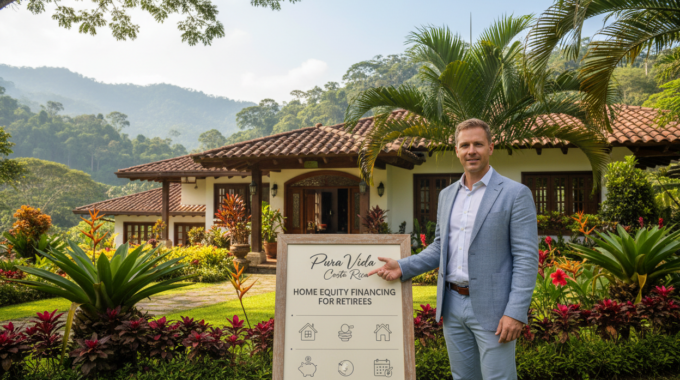
Many retirees own a house or land in Costa Rica. They often need access to capital for living expenses or projects. Traditional banks can be a challenge. These institutions may not understand foreign property or a retiree’s income.
We specialize in real estate-backed financing for property owners here. Our process is an alternative to conventional bank mortgages. We focus on a documentation-driven approach to unlock the value in your asset.
Our role is purely educational. We publish this information to help you understand how these loans work in the local context. We coordinate with private lenders to secure clean, first-lien mortgage positions. This avoids the complications of second liens.
This guide will walk you through the key considerations. We’ll cover the documentation requirements and process steps. Our goal is to provide clear, useful information as you explore your options.
Understanding Home Equity Loans and the Costa Rican Market
Unlocking the value tied up in your Costa Rican property provides a practical solution for funding retirement goals. This process involves borrowing against the equity you’ve built, converting it into cash without selling your home.
Overview of Home Equity Loans for Retirees
Many retirees own their homes outright or have significant equity. Traditional banks often view retirement income as difficult to verify across borders. An equity loan offers an alternative path to access capital.
It differs from standard bank mortgages, which are rarely approved for foreigners. It also isn’t the same as short-term owner financing or a HELOC from your home country. This is a distinct product for the local context.
Insights into the Costa Rican Real Estate Landscape
The real estate market here has seen steady value growth. Popular areas like the Central Valley and Guanacaste have appreciated over the past decade. The market remains affordable compared to many international destinations.
Growth is projected to continue annually. However, the country’s banking system is famously conservative. This means traditional mortgage financing is almost never an option for foreign property owners.
Local banks typically require 30-60% down payments and have lengthy processes. Interest rates are often higher than in North America. This reality makes understanding your financing property in Costa Rica options crucial.
Knowing both the loan mechanics and the market landscape helps you make an informed decision. It ensures you choose the right path for your financial situation.
Borrower Preparation and Essential Documentation
A successful loan application begins with thorough preparation of your essential documents. Unlike traditional banks that demand extensive financial history, we focus on a streamlined set of records. This approach saves time and avoids unnecessary hurdles.
Key Property Documents and Proof of Equity
Start by gathering clear details about your asset. You’ll need the exact location, size, and current use of your house or land. The official registered survey, or plano catastrado, is non-negotiable. It shows your property boundaries and is required for any transaction.
Proof of equity means showing what you own versus what you owe. Provide your original purchase records or recent tax assessments. For some properties, water availability letters or easement documents are also needed. These ensure there are no hidden access issues.
Personal Information, Ownership, and Tax Status
We must know how the property is owned—in your personal name or through a Costa Rican corporation. Your tax status may be relevant for the loan structure. We also need to understand your intended use for the funds. This helps us tailor the solution correctly.
Have your valid passport and current contact details ready. Coordinating internationally requires reliable ways to communicate. Gathering this paperwork upfront streamlines the entire process. It’s far simpler than the credit reports and bank statements traditional institutions require.
Our Documentation-Driven Process for Secure Lending
Navigating a loan process in Costa Rica requires a clear, step-by-step approach focused on documentation. We manage this journey to create a secure path to financing for property owners.
From Intake to Document Review
It starts with our intake phase. We gather your initial property and borrower details. Having your paperwork organized makes a real difference in speed.
We then review everything you provide. Our goal is to verify completeness and identify any gaps. This builds the file we present to our private lending partners.
Due Diligence, Title Review, and Structuring
Next comes due diligence. We dig into the property’s legal status to confirm a clean title. This protects everyone from issues that could surface years later.
With a clear title, we structure the loan terms. We coordinate with the lender to ensure a secure first-lien mortgage position. This step makes the deal work for both parties.
Closing and Lien Registration Steps
The final stage is closing. Local attorneys handle the paperwork and register the mortgage with the National Registry. Government fees for this are typically around 2% of the loan amount.
Please adjust your timeline expectations. Business culture here is casual and operates on “Pura Vida” time. What takes a week elsewhere might take a month here, but it gets done.
We manage the documentation and coordination. The final loan approval and specific terms come from the private lender based on your file.
Coordinating with Private Lenders for a First-Lien Mortgage Position
In Costa Rica’s financing landscape, achieving a clean first-lien mortgage is what makes private lending viable for foreign owners. We coordinate this entire process. Our job is to ensure the lender receives a secure, primary claim on your property.
How We Ensure No Second Lien Issues
A first-lien position means the lender holds the primary legal claim. If repayment issues arose, they would be first to recover their investment. This security allows for better terms.
Costa Rica’s less-regulated environment can hide title problems or unrecorded claims. These create risky second-lien scenarios. Our due diligence identifies and resolves these issues upfront.
We act as your documentation manager. We verify everything and present a clean file to the lender. This diligence protects everyone and prevents unfavorable last-minute terms.
The Role of Private Lenders in Streamlining Your Loan
Traditional Costa Rican banks almost never approve foreign property owners. Some international banks here offer an option, but with high interest rates and significant fees.
Private lenders are the realistic path. They can move faster, free from institutional bureaucracy. They still require the same security—hence our focus on that first-lien position.
We don’t set interest rates or payment structures. The lender determines those based on your file. Standard government fees to register a mortgage apply regardless of the financing source.
Our coordination creates a streamlined path where traditional avenues fail. We connect you with lenders who actually work with foreign property owners.
Optimizing your loan fit involves balancing the amount you borrow with the quality of your paperwork. This balance is measured by your loan-to-value ratio, or LTV.
If your house is worth $400,000 and you need $200,000, that’s a 50% LTV. You’re borrowing half the property’s value. Our guideline is up to 50% LTV, but lower is always better.
LTV Guidelines and Optimizing Loan Fit with Strong Documentation
Borrowing 30% or 40% of your property’s value presents a much stronger case. It reduces the lender’s risk significantly. If you need less than the maximum, request it.
Strong documentation supports your application, especially at higher LTVs. Provide clear records of your asset’s value and ownership. For retirees, focus on your property equity over traditional monthly income.
Compare this to other financing options. Local banks might lend 40-70% LTV but rarely approve foreigners. Owner financing often demands 50% down.
Private lender rates here are higher than U.S. bank rates. Terms are shorter, and government fees add about 2% to the cost. These are the trade-offs for accessing your equity.
Strong paperwork doesn’t guarantee approval, but weak documents almost ensure rejection. To explore your financing options, start with organized records.
Embarking on Your Costa Rican Homeownership Journey
Your journey as a property owner in Costa Rica represents both a personal achievement and a significant financial asset. The market here continues to show stable growth, making your home a sound long-term investment.
We’ve provided this educational information to help you understand your financing options. This content is not legal advice or a loan offer.
If exploring an equity loan makes sense for you, the next step is clear. Gather your property documentation and consider a realistic loan-to-value target.
Reach out via WhatsApp at +506 4001-6413 or call our USA/Canada line at 855-562-6427. You can also visit gapequityloans.com. We coordinate the process with lenders to secure first-lien mortgages.
While not every situation is a fit, accessing your property’s value is possible with the right approach and documentation.
FAQ
What specific documents do I need to start the process for a home equity loan on my property in Costa Rica?
You’ll need to provide proof of ownership, like a registered deed (escritura), and a current property tax receipt. We also require a recent appraisal to confirm your equity. For your personal documentation, we need a copy of your passport, proof of pension or retirement income, and your Costa Rican tax status (DIMEX or Residencia). Gathering these items upfront helps us assess your situation quickly.
How does your process ensure my loan is secure and the title is clear?
Our core strength is managing the documentation and legal due diligence. We conduct a thorough title review at the National Registry to confirm you are the sole owner and that no hidden liens exist. We then structure the loan to be registered as a first-lien mortgage, giving the lender primary security and protecting your ownership rights through a clean, official process.
Why work with a private lender instead of a traditional Costa Rican bank for this type of financing?
Local banks often have rigid credit requirements and lengthy approval processes that can be challenging for foreign retirees. Private lenders we work with focus on the asset’s value and your equity, offering more flexible terms. We coordinate directly with these lenders to streamline the approval, making it a more accessible and efficient financing option for property owners.
What are the typical loan-to-value (LTV) ratios, and how can I improve my chances for favorable terms?
LTV ratios typically range from 30% to 50% of your property’s appraised value. The strongest factor for a good LTV and rate is complete, orderly documentation. A clear title, official proof of income, and a professional appraisal demonstrate low risk. We help you present a solid, documented case to the lender, which directly influences your loan fit and terms.
What costs and fees should I budget for beyond the loan amount?
You should plan for closing costs, which include legal fees, National Registry registration fees, and notary public charges. There are also costs for the mandatory property appraisal and title search. We provide transparent fee estimates early on so there are no surprises. These are standard costs to legally perfect the mortgage and protect all parties.
How long does the entire process take from application to receiving funds?
The timeline is largely dependent on how quickly we receive your complete documentation package. With all documents in order, the process—including due diligence, lender approval, and closing—can often be completed within a few weeks. This is significantly faster than traditional bank financing in Costa Rica, where the process can take many months.
Article by Glenn Tellier (Founder of CRIE and Grupo Gap)
Get expert guidance on securing-a-bridge-loan-for-property-in-costa-rica. Our documentation-driven process ensures a clean closing with a first-lien mortgage position.
"Investing-in-undeveloped-land-in-costa-rica? Unlock property value with GAP Equity Loans. Learn how our documentation-driven process secures financing for your Costa Rica land."
Discover asset-based loans with GAP Equity Loans. Our expert team guides you through a transparent, documentation-driven process for Costa Rica real estate-backed financing.