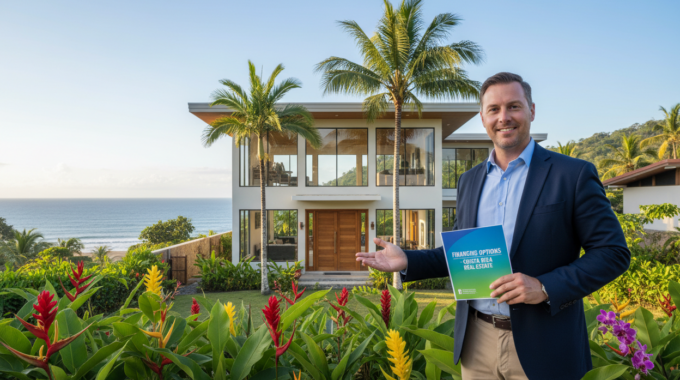
The Dominical area represents one of Costa Rica’s most desirable real estate markets. It attracts a growing number of foreign buyers. These buyers often seek financing solutions that traditional banks cannot provide.
Owning property here is a realistic dream for many. However, accessing capital against that property requires a different approach. It’s not the same as a conventional home loan.
We publish educational content about real estate-backed equity loans in Costa Rica. This information helps property owners understand their options. Our focus is on a documentation-driven process for financing.
Foreign investment in this market is up over 20 percent. Appreciation rates in coastal zones run 8 to 15 percent annually. This strong demand makes equity-based financing a relevant tool for buyers.
We set realistic expectations. We don’t publish rates or payment examples upfront. Every loan scenario is unique and depends on thorough documentation.
Our collaborative tone reflects Costa Rica’s casual business culture. This article will guide you through our approach, eligibility, and the process. Let’s explore how you can leverage your property’s equity.
Understanding Costa Rica Real Estate-Backed Equity Loans
Equity loans secured by Costa Rican real estate fill a crucial gap in the local financing landscape. This is not a traditional mortgage for a new purchase. Instead, it is a financing solution secured by the equity you already hold in your property.
It serves owners who have substantial equity but face hurdles with traditional banks. Residency status or income documentation can be obstacles. An equity loan provides a path to access that capital.
Our Documentation-Driven Approach
We run a process centered on strong documentation. We work with you to assemble a complete package before approaching any lenders. This includes your property title, survey, proof of equity, and your information.
A stronger package improves the fit. Our guideline goes up to 50% loan-to-value (LTV). Borrowers at 30-40% LTV with pristine documentation typically see a smoother process.
Placing Lenders in a First-Lien Position
When approved, the private lender is placed in a first-lien mortgage position. This means no other liens take priority over their loan. It provides crucial protection for the lender.
This first-position requirement also benefits you, the borrower. It allows for more favorable consideration than subordinate financing. It’s a key difference from products like HELOCs, which we do not offer.
Exploring Financing Options for Property in Costa Rica
Foreign investors exploring Costa Rica’s real estate market encounter a spectrum of financing paths. Each option carries distinct advantages, limitations, and timelines. Understanding this landscape is crucial for making an informed decision.
No single method suits every buyer or situation. Your choice depends on your residency, documentation, timeline, and financial goals.
Comparing Private Lenders and Local Banks
Local Costa Rican banks offer familiar mortgage structures with longer terms. Their processes, however, are often slow and require extensive documentation from foreign buyers.
Private lenders provide a faster, more flexible alternative. They excel with short-term financing needs but typically come with higher associated costs.
Alternative Financing Methods for Foreign Buyers
Seller financing is a popular and flexible option here. A motivated seller acts as the lender, often with tailored terms.
Offshore and international lenders specialize in cross-border transactions. They offer quicker approvals than local banks but may involve different considerations.
Knowing all your options empowers you. It helps you identify the right path, whether for a new purchase or accessing your property’s existing equity.
need-a-loan-in-dominical-costa-rica: Key Guidelines and Eligibility
Eligibility for real estate-backed financing hinges on two primary factors. Your loan-to-value ratio and the strength of your documentation define the process.
Many property owners in the area seek this type of financing for renovations or investments. We guide you through the core requirements.
LTV Limits and Documentation Strength
Our guideline extends to 50% loan-to-value. A lower request, around 30-40%, significantly improves your position.
Why does this matter? A lower LTV reduces lender risk. It demonstrates your financial commitment and stability.
Strong paperwork is equally crucial. Lenders need confidence in your property’s legal standing and your credibility.
Borrower Preparation Essentials
Preparation is your most powerful tool. Start by gathering a complete documentation package.
This includes your property’s survey, proof of equity, and ownership structure details. Also prepare water letters and any easement documents.
Clearly state the intended use of funds and provide your contact information. We offer no guarantees, as approval depends on lender underwriting.
Understanding all your financing options for Costa Rica property is wise. Thorough preparation creates the strongest possible application for loans.
Navigating the Costa Rican Property Market
The current momentum in Costa Rican property investment creates a favorable environment for leveraging equity. Foreign investment jumped over 20% last year. This signals strong international confidence.
Properties in coastal hotspots appreciate 8-15% annually. Limited inventory and growing demand drive values. This builds equity you can access.
Current Market Trends and Investment Opportunities
Buyers target diverse properties like beachfront condos and luxury homes. Areas like Dominical, Uvita, and Ojochal remain popular. These markets attract retirees, investors, and remote workers.
Understanding these trends helps position your financing request. Strong markets support lender confidence.
Legal and Ownership Considerations for Foreign Buyers
Costa Rican law grants foreigners full ownership rights. This provides a stable legal foundation. However, maritime zone properties have special rules.
Ownership can be personal or through a local corporation. Each has different implications. For a detailed guide for Canadians buying real estate property in Costa, review specialized resources.
Property taxes are low at 0.25% annually. Transaction costs are predictable. Knowing this helps assess your true equity position when you get a loan in Dominical.
Steps in Our Documentation-Driven Loan Process
We manage a structured, documentation-focused process from initial contact to final lien registration. It’s a coordinated journey where we prepare your file and then work with the private lender.
From Intake to Due Diligence and Title Review
It starts with your intake call. We assess your property’s equity and financing needs. Next, we collaborate to assemble your complete documentation package.
This includes your property survey, proof of equity, and ownership details. Our team then coordinates a thorough title review and due diligence in Costa Rica. This step confirms clear ownership and establishes value.
Structuring the Loan and Lien Registration
With due diligence complete, we facilitate loan structuring with the lender. This sets the amount, rate, and repayment terms. The formal closing is handled by a licensed Costa Rican notary public.
The notary prepares the mortgage documents and oversees fund transfer. Finally, they register the lien, securing the lender’s first-position claim. Timelines vary from weeks to months based on documentation quality.
We coordinate every step but cannot guarantee approval. Success relies on our team, your preparation, and the lender’s final underwriting.
Embark on Your Costa Rican Home Financing Journey
Turning your Costa Rican property investment into accessible capital is a process built on preparation. This article provided educational insights into equity-based financing. Your unique situation deserves a personalized review.
We invite you to discuss your property and goals with our team. Reach us via WhatsApp at +506 4001-6413 or call toll-free at 855-562-6427. You can also visit gapequityloans.com to start the conversation.
Our philosophy is educational and pressure-free. We operate in Costa Rica’s casual business culture—think polos, not suits. This is about collaborative problem-solving.
Remember, this content is informational, not professional advice. Consult local attorneys and tax experts for your specific needs. Starting to gather your property documents now will smooth the path forward.
Your dream of leveraging your home equity is achievable. With thorough preparation and the right guidance, your next chapter in Costa Rica awaits.
FAQ
What exactly is a real estate-backed equity loan in Costa Rica?
It’s a financing option where you use your existing property’s equity as collateral. We help you secure a loan from a private lender, who places a first mortgage lien on your asset. This gives you access to capital without needing to sell your home, which is ideal for funding projects, investments, or other major expenses.
Why choose a private lender over a local bank for financing?
Local banks often have lengthy processes and strict requirements that can be challenging for foreign property owners. Private lenders we work with offer more flexible terms and a faster timeline. While interest rates may be higher, the efficiency and accessibility often make this the preferred option for many buyers and owners.
What are the main eligibility factors for this type of loan?
The two pillars are your property’s value and your documentation. Loan-to-value (LTV) limits are typically lower than in North America, often maxing at 50%. Strong, organized documentation—like a clear property title, appraisal, and your financial history—is crucial for approval and securing favorable terms.
How does the current Costa Rican real estate market affect financing?
A strong market increases your property’s equity, which can improve your borrowing power. We guide you on current trends in areas like Dominical to help you understand your asset’s value. For foreign buyers, navigating ownership structures, like setting up a corporation, is a key legal step before securing any loan.
Can you explain the documentation-driven process?
Our entire approach is built on meticulous preparation. We start by collecting all your property and financial documents. Our team then conducts thorough due diligence and title review to ensure there are no legal obstacles. Finally, we structure the loan agreement and manage the official lien registration with the National Registry.
What should I prepare before starting the loan application?
Begin by gathering your property’s registered title (folio real), your identification, and proof of funds or income. Having a recent appraisal is also very helpful. Being prepared with these items upfront significantly speeds up our intake process and helps us present the strongest possible case to our lender network.
Article by Glenn Tellier (Founder of CRIE and Grupo Gap)
Get expert guidance on securing-a-bridge-loan-for-property-in-costa-rica. Our documentation-driven process ensures a clean closing with a first-lien mortgage position.
"Investing-in-undeveloped-land-in-costa-rica? Unlock property value with GAP Equity Loans. Learn how our documentation-driven process secures financing for your Costa Rica land."
Discover asset-based loans with GAP Equity Loans. Our expert team guides you through a transparent, documentation-driven process for Costa Rica real estate-backed financing.