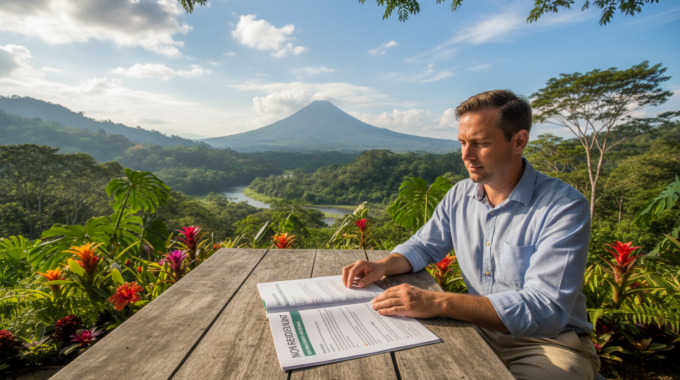
Many people dream of owning a home or investment property in Costa Rica. The beauty and opportunity are compelling. But a big question often follows: how do buyers from abroad actually secure the necessary financing?
Traditional bank loans in Costa Rica are technically available to foreigners. The reality, however, involves significant hurdles. Local banks can be slow and bureaucratic. They often struggle to verify foreign income and credit history.
All documents must be officially translated into Spanish. This process makes the conventional route challenging for most international buyers.
This guide provides clear, honest information about the financing landscape. We aim to cut through the confusion. Our purpose is purely educational—we are not offering legal or tax advice, nor a formal loan offer.
We at GAP Equity Loans serve as an informational resource. We help property owners understand real estate-backed equity loan options. The financing environment here is different from the U.S. or Canada.
With proper preparation and documentation, securing financing is entirely achievable. Success hinges on a meticulous, documentation-driven process. This involves reviewing property details, ownership structures, and titles.
We focus on coordinating with private lenders to establish clean, first-lien mortgage positions. Our goal is to help you prepare thoroughly for a smooth closing.
Exploring Costa Rica’s Unique Financing Landscape
Securing funds for a property here isn’t a one-size-fits-all process. The market is defined by multiple, parallel avenues. Each path has distinct rules for qualification and documentation.
Financing Options: Banks, Private Lenders, and Developer Solutions
Traditional bank mortgages are one route. Costa Rican banks are split between government and private institutions. Private banks have become more open to foreign applicants, but the process is thorough and conducted in Spanish.
Private lenders, known locally as prestamistas, offer a different model. They provide loans secured by a First Degree Mortgage on real estate. We coordinate with these lenders for equity-based financing, not traditional bank products.
Developer or owner financing is a third common path. Sellers in coastal and resort areas often create direct installment plans. This can simplify the process for the buyer.
Tailored Approaches for Non-Resident Buyers
The right choice depends on your profile and patience for paperwork. Success in any avenue hinges on preparation and clear documentation. For a detailed look at these pathways, explore our resource on real estate financing options in Costa.
Our Documentation-Driven Process for Secure Loan Structuring
We manage a structured, documentation-driven process designed to build a complete and accurate loan file. This isn’t about quick approvals. It’s about creating a transparent foundation for a secure transaction.
Our methodology begins with a detailed intake. We gather information about your property, ownership structure, and goals. This initial review determines if your scenario aligns with typical lending guidelines.
Step-by-Step Documentation Workflow
The next phase involves assembling all necessary documents. This includes the property’s legal description, survey maps, and proof of equity. Your personal identification and the land’s tax status are also key pieces.
We then conduct thorough due diligence and title review. This step ensures the property has no existing liens or ownership issues. A clean title is essential for establishing a first-priority security interest.
Coordinating with Private Lenders for a First-Lien Mortgage
Once the file is complete, we coordinate with the private lender’s attorney for structuring. The mortgage instrument is prepared to meet all local legal requirements. This ensures the lender will hold a first-lien mortgage position.
The closing process involves signing before a notary public. Funds are disbursed according to the agreement. The final, critical step is registering the lien in the National Registry to perfect the lender’s security.
We act as the bridge, managing this coordination with private equity loan providers. Approval is never guaranteed. It depends on your documentation quality, the property’s specifics, and the lender’s criteria.
Mastering Non-Resident Financing in Costa Rica
The key to unlocking property financing here lies in understanding the local approach to documentation. Mastery isn’t about perfect credit scores. It’s about comprehending the landscape to make informed decisions.
Success in this financing environment comes from respecting the process. There are no reliable shortcuts. Thorough preparation and patience yield the best results for buyers.
The strongest candidates combine several factors. A clear property title is fundamental. Substantial equity position improves fit, as does complete documentation and realistic expectations.
Property characteristics matter significantly to lenders. Location, legal status, and access to utilities build confidence. Clear boundaries and no encumbrances are essential. For deeper insight, consider how real estate Costa Rica use leverage can fit into a strategy.
Treat the process as a documentation project, not just an application. Organized, complete information leads to smoother outcomes. Costa Rica’s legal culture values thoroughness and proper procedure.
Working with qualified attorneys protects everyone’s interests. “Mastering” also means recognizing when a scenario isn’t a good fit. This early awareness saves time and frustration.
The information here equips you with a knowledge foundation. Implementation requires professionals who understand local law and lending. Explore personal loan options Dominical Costa Rica as one potential path forward.
Preparing Essential Property and Financial Documentation
Before any formal process begins, assembling a complete set of property and financial records is the critical first step. Strong, organized documentation is the single most important factor for a smooth and efficient application.
Required Borrower Details and Property Information
Start with the property’s core legal documents. You will need the registered legal description from the National Registry. A current survey map showing boundaries is also essential.
Proof of water availability and any easement agreements are required. Your ownership structure dictates other paperwork. Personal ownership requires your identification and proof of title.
If held in a local corporation, you must provide the complete, notarized corporate documents.
Proof of Equity and Documentation Essentials
Lenders need clear proof of your equity in the asset. Provide purchase documents or payment records. Recent appraisal reports can also demonstrate current value.
Prepare recent bank or investment account statements. These show your financial capacity. Some lenders may request income verification or tax returns.
Clearly state the intended use for the loan funds. A lower loan-to-value ratio, combined with this strong documentation package, significantly improves your fit for approval. Working with a qualified attorney early helps identify any gaps.
Navigating the Approval and Closing Journey
After assembling your documentation package, the focus shifts to lender due diligence and legal structuring. This phase ensures a secure transaction for all parties.
Due Diligence, Title Reviews, and Structuring Process
The lender initiates a thorough title review at the National Registry. They verify clear ownership and check for any existing liens. This step is critical for establishing a first-lien mortgage position.
Assuming a clean title, the lender’s attorney prepares the formal mortgage instrument. This document specifies the loan amount, interest rate, and all legal terms. The approval decision hinges on this review and your complete file.
The closing process requires you to sign the mortgage deed before a notary public. Various fees, like notary and registration costs, are settled at this time. The lender then provides the funds according to the agreed terms.
Finally, the executed mortgage is registered to perfect the lender’s security interest. The entire timeline depends on documentation completeness and property specifics. We coordinate this process but cannot guarantee specific outcomes.
Understanding Loan Terms and Costa Rican Financing Nuances
When evaluating financing options, it’s essential to grasp how terms differ from your home country. Loan structures here are more conservative. Guidelines often allow up to 50% loan-to-value, with lower ratios improving your fit.
Interest rates in this market generally reflect higher assessments of lending risk. They are typically higher than rates in North America. This is a key difference to understand when planning your investment.
Term lengths vary significantly by lender type. Traditional bank mortgages may extend for 15 to 30 years. Private lender arrangements often involve shorter terms of one to five years.
Most real estate financing is denominated in U.S. dollars. This simplifies matters for American buyers. Your residency status can affect which options are available to you.
Banks focus heavily on verifying foreign income and credit history. Private lenders may prioritize property equity value instead. Strong documentation always strengthens your position.
This information is educational, not a lending offer. Understanding these nuances helps you set realistic expectations. Thorough preparation is your best path forward.
Taking the Next Step Toward Your Costa Rican Dream
With a clearer picture of the documentation and expectations, you’re better positioned to take action. Owning property here is an achievable goal for prepared buyers who respect the local process.
We at GAP Equity Loans provide the educational information to help you understand your options. Our documentation-driven process coordinates with private lenders for scenarios that fit their guidelines.
Remember, this guide offers information only—not legal or tax advice. Approval is never guaranteed. Business culture is casual here; think polo shirts, not suits and ties.
If your situation aligns with typical guidelines, begin a conversation. Contact us via WhatsApp at +506 4001-6413, call 855-562-6427 from the US/Canada, or visit gapequityloans.com. Initial talks are exploratory.
Whether you pursue this path or another, the knowledge from this guide empowers your real estate investment decisions in Costa Rica.
FAQ
What are the main financing options for a foreign buyer in Costa Rica?
The primary paths are private lenders and developer financing. Costa Rican banks typically require local residency or income, making them less accessible. We focus on connecting you with trusted private lenders who understand the market and can offer a first-lien mortgage based on your property’s equity and your financial profile.
What documentation do I need to start the loan application process?
You’ll need proof of identity, recent income statements or tax returns, and complete details on the property you own or wish to purchase. This includes the title study, registered property value, and any existing liens. We guide you through gathering every required document to build a strong application.
How do interest rates and terms compare to traditional bank loans?
Rates from private lenders are generally higher than local bank mortgages but are competitive within the alternative lending space. Loan terms are often shorter, typically ranging from 3 to 10 years. The key advantage is accessibility and a process designed for the realities of the Costa Rican real estate market for foreign investors.
What is the role of an attorney in this financing process?
A qualified Costa Rican attorney is essential. They conduct the crucial title review, ensure the property is free of legal issues, and prepare the mortgage deed (prenda) for the public registry. We coordinate closely with your attorney to manage all legal documentation, ensuring a clean and secure closing.
How long does the approval and funding process typically take?
From complete documentation submission to closing, the process usually takes between 4 to 8 weeks. The timeline depends on the complexity of the title review, the lender’s due diligence, and the registration schedule. Our structured workflow is designed to keep this process moving efficiently.
Can I use this financing for any type of property in the country?
Most residential and commercial real estate qualifies, including houses, condos, and land. The property must have a clear title and sufficient appraised value to support the loan. Certain property types or extremely remote locations may have limitations, which we evaluate during our initial consultation.
Article by Glenn Tellier (Founder of CRIE and Grupo Gap)
Get expert guidance on securing-a-bridge-loan-for-property-in-costa-rica. Our documentation-driven process ensures a clean closing with a first-lien mortgage position.
"Investing-in-undeveloped-land-in-costa-rica? Unlock property value with GAP Equity Loans. Learn how our documentation-driven process secures financing for your Costa Rica land."
Discover asset-based loans with GAP Equity Loans. Our expert team guides you through a transparent, documentation-driven process for Costa Rica real estate-backed financing.