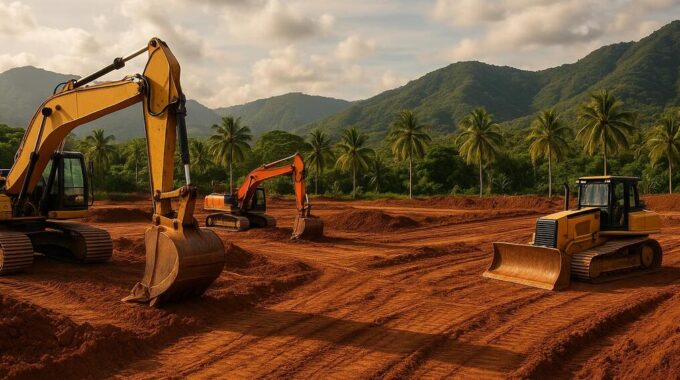
Costa Rica, a nation celebrated for its lush rainforests and pristine beaches, has also cultivated a fertile ground for real estate development and foreign investment. For developers eyeing this tropical paradise, the term “shovel-ready” represents the gold standard of project preparedness. But what does it truly mean to be shovel-ready in Costa Rica’s 2025 landscape? It’s more than just owning a piece of land; it’s about navigating a complex web of permits, regulations, and financing to the point where construction can begin without delay. This guide will walk you through the critical path to achieving shovel-ready status, explore why Costa Rica remains a prime investment destination, and reveal how specialized financing solutions from GAP Equity Loans can turn your development dreams into reality.
What Does Shovel-Ready Really Mean for Your Costa Rica Project?
The concept of a shovel-ready project has evolved. In 2025, it signifies a construction project that has progressed through the arduous planning and approval stages and is poised for immediate execution upon securing funding. This means all essential permits are in hand, from land-use and environmental clearances to architectural and municipal approvals. For investors and lenders, a shovel-ready project is significantly de-risked, making it a far more attractive proposition than a raw piece of land with an uncertain future.
According to Investopedia, a shovel-ready project is one where “planning is more or less complete, approval permits are in place, and laborers can get to work once sufficient funding is secured.” In Costa Rica, this translates to a project that has successfully navigated the country’s specific regulatory framework, a process that can take anywhere from six to nine months, or even longer if not managed correctly.
The Critical Path to Shovel-Ready Status in Costa Rica
Achieving shovel-ready status in Costa Rica is a multi-step process that requires careful planning and local expertise. Each permit is a critical checkpoint, and skipping a step or submitting incomplete information can lead to significant delays and budget overruns. Here’s a breakdown of the essential permits and approvals you’ll need:
The Land-Use Permit (Uso de Suelo): Your Project’s Foundation
The Uso de Suelo is the cornerstone of any construction project in Costa Rica. Issued by the local municipality, this document certifies that your proposed project aligns with the area’s zoning regulations. It defines whether the land can be used for residential, commercial, tourism, or agricultural purposes. Without a valid Uso de Suelo, you cannot proceed with any other permit applications. It’s a common and costly mistake for foreign investors to purchase land without first verifying its intended use. In 2025, it is imperative to obtain this certificate before closing any land deal. The timeline for receiving the Uso de Suelo can vary from a few weeks in urban areas like Escazú to several months in more rural zones.
Navigating Environmental Regulations (SETENA)
Costa Rica’s commitment to environmental protection is enshrined in its permitting process, which is overseen by the National Environmental Technical Secretariat (SETENA). Depending on your project’s size, location, and potential environmental impact, you will need to submit either a simple D1/D2 declaration or a full Environmental Impact Assessment (EIA). Projects located near sensitive ecosystems, such as mangroves, rivers, or protected forests, will face greater scrutiny. For example, beachfront developments often require a more detailed Category B environmental study. As of 2025, SETENA has increasingly moved towards digital submissions, but the review process can still take two to six months. Engaging a local environmental consultant who is familiar with SETENA’s current requirements can significantly expedite this process.
Securing Your Water Supply: The Essential Water Letter
A guaranteed water source is a non-negotiable prerequisite for construction in Costa Rica. The Water Letter (Carta de Disponibilidad de Agua), issued by the national water authority (AyA) or the local community-managed water association (ASADA), confirms that your project has a legal and sufficient water supply. Municipalities will not even review your construction plans without this letter. In popular development areas like Guanacaste, the demand for water permits is at an all-time high, making this one of the most significant potential bottlenecks in the permitting process. Proactive developers are exploring sustainable solutions like rainwater harvesting and graywater recycling to not only secure their water supply but also to enhance their project’s appeal to eco-conscious buyers.
Gaining Professional Approval from CFIA
All architectural and engineering plans for your project must be reviewed, approved, and digitally stamped by the Federated College of Engineers and Architects (CFIA). This professional board ensures that your project’s designs comply with Costa Rica’s building codes and safety standards. The CFIA has a fully digital submission process, and the fees are calculated based on the project’s estimated construction cost. To avoid delays, it is crucial to submit a complete set of technical plans—including structural, electrical, and plumbing designs—all at once.
The Final Hurdle: The Municipal Building Permit
Once you have successfully obtained all the preceding permits and approvals, you can apply for the Municipal Building Permit (Permiso de Construcción). This is the final authorization you need to begin construction. The municipality will conduct a thorough review of all your documentation, including your property tax status. It’s important to note that any outstanding property tax bills can freeze your permit application. Ensuring all your paperwork is in order and that you are in good standing with the municipality is key to a smooth and timely approval.
Permit/Approval
Issuing Body
Average Timeline (2025)
Land-Use Permit (Uso de Suelo)
Local Municipality
2 weeks – 3+ months – minimum
Environmental Viability (SETENA)
SETENA
2 – 6 months – minimum
Water Letter (Carta de Agua)
AyA or ASADA
1 – 4 months – minimum
CFIA Plan Approval
CFIA
2 – 6 weeks – minimum
Municipal Building Permit
Local Municipality
1 – 3 months – minimum
Is Costa Rica Still a Good Place to Invest in 2025?
Despite the complexities of its permitting process, Costa Rica remains a highly attractive destination for foreign investment, and for good reason. As the oldest continuous democracy in Latin America and the newest member of the OECD, Costa Rica offers a stable political and economic environment. The U.S. Department of State’s 2025 Investment Climate Statement highlights the country’s well-educated labor force, mature regulatory framework, and low levels of corruption as key advantages for investors.
In 2024, foreign direct investment in Costa Rica reached $4.322 billion, with the United States being the largest source of investment. The country’s success in attracting high-tech companies across sectors such as life sciences, advanced manufacturing, and semiconductors has created a dynamic, resilient economy. The tourism sector also continues to thrive, with nearly 3 million visitors in 2024.
However, investors should also be aware of the challenges. High energy costs, a persistent government fiscal deficit, and the need for infrastructure improvements are all factors to consider. Nevertheless, the Costa Rican government, under the leadership of President Rodrigo Chaves, has made attracting foreign investment a top priority, with a focus on cutting red tape and streamlining the business environment.
How Do You Fund a Shovel-Ready Project in Costa Rica?
Once your project is shovel-ready, the final piece of the puzzle is securing the necessary funding. While traditional bank financing is an option, it can often be a slow and rigid process, especially for foreign investors. This is where private lenders like GAP Equity Loans come in. As a leading provider of private lending and hard money loans in Costa Rica, GAP Equity Loans offers a faster, more flexible alternative to traditional financing.
Hard money loans are asset-based loans that are secured by real estate. They are an ideal solution for construction projects, land acquisition, and bridge financing. With interest rates typically ranging from 12% to 18%, hard money loans offer a number of advantages over traditional bank loans, including:
Speed: Private lenders can often close and fund a loan within 7-10 business days, compared to the months it can take to secure a bank loan.
Flexibility: Private lenders are more willing to work with foreign investors and can offer more creative financing solutions.
Focus on Equity: Private lenders are primarily concerned with the value of the property being used as collateral, rather than the borrower’s credit history.
GAP Equity Loans specializes in the Costa Rican market and has a deep understanding of the unique challenges and opportunities of developing real estate in the country. Their team of experts can help you navigate the complexities of the local market and secure the funding you need to get your project off the ground. Whether you’re looking for a construction loan, project funding, or a home equity loan, GAP Equity Loans has a solution to meet your needs.
Frequently Asked Questions (FAQ)
1. How long does it really take to get a construction project to be shovel-ready in Costa Rica?
On average, you should plan for a 6 to 9-month timeline to navigate the entire permitting process. However, this can be longer in rural areas or for complex projects that require extensive environmental reviews.
2. Can I apply for permits myself as a foreign investor?
No, all permit applications must be submitted by a licensed Costa Rican architect or engineer who is a member of the CFIA.
3. What is the biggest mistake foreign developers make in Costa Rica?
The most common mistake is purchasing land without first obtaining a Land-Use Permit (Uso de Suelo). This can lead to costly delays and, in some cases, may even prevent you from building on the property at all.
4. Are there any restrictions on foreign ownership of property in Costa Rica?
Generally, foreigners have the same rights to own property as Costa Rican citizens. The main exception is the Maritime Zone, where private ownership is restricted. Foreigners can, however, lease property in this zone through a concession.
5. Why should I consider a hard money loan instead of a traditional bank loan?
Hard money loans offer speed and flexibility that traditional banks often can’t match. They are an excellent option for developers who need to move quickly on a project or who may not qualify for a traditional bank loan.
6. What kind of projects does GAP Equity Loans finance?
GAP Equity Loans provides financing for a wide range of real estate projects, including residential and commercial construction, land acquisition, project funding, and home equity loans.
7. What are the typical interest rates for hard money loans in Costa Rica?
Interest rates for hard money loans in Costa Rica typically range from 12% to 18% annually, depending on the specifics of the loan and the project.
8. How can I get started with GAP Equity Loans?
You can learn more about their services and contact their team of experts through their website at gapequityloans.com.
Conclusion
Costa Rica’s thriving economy and stunning natural beauty make it an irresistible destination for real estate developers. By understanding the intricacies of the country’s permitting process and securing the right financing, you can position your project for success. Achieving shovel-ready status is a testament to your project’s viability and your commitment to navigating the local regulatory landscape. With a trusted partner like GAP Equity Loans by your side, you can unlock the funding you need to break ground and bring your vision to life in this tropical paradise.
Disclaimer: The images used in this article are AI-generated for illustrative purposes only and do not depict actual projects or locations. GAP Equity Loans is an expert in private lending, equity loans, real estate, and investments in Costa Rica. For matters outside of this expertise, we recommend consulting with a qualified professional.
Article by Glenn Tellier (Founder of CRIE and Grupo Gap)