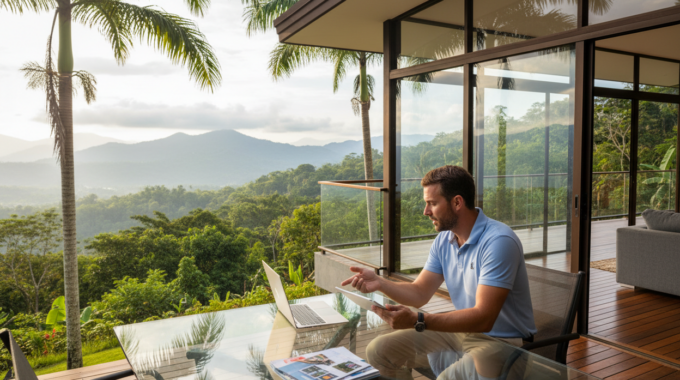
Creating a custom home in Costa Rica is a powerful dream for many. It represents a chance to design a living space that perfectly reflects your personal vision and lifestyle.
Foreign investors have a strong legal foundation here. National law grants foreigners the same property rights as local citizens.
You have two main paths. Buying an existing property is common. Building from the ground up, however, ensures your residence matches your long-term needs.
Turning this vision into reality requires specific qualities. Patience, detailed planning, and local expertise are non-negotiable for navigating the unique landscape.
The construction process here has its own rhythms and rules. Understanding this local context is essential for any new building endeavor.
We guide you through these complexities. Our goal is to provide the clarity and professional support you need to move forward with confidence.
Understanding the Costa Rican Development Landscape
Navigating Costa Rica’s property scene demands insight into current trends and community life. We help you build that foundational knowledge.
Assessing Market Trends and Local Opportunities
Successful building in Costa Rica starts with recognizing established areas. Towns like Tamarindo, Playa Grande, and Flamingo show steady demand from foreign buyers.
We advise visiting your chosen community during both high and low seasons. This gives you a realistic view of daily life and local rhythms.
Expat Insights and Lifestyle Considerations
Your chosen location directly shapes your lifestyle. Do you seek the quiet of the jungle or the energy of a beach town?
Many buyers find greater satisfaction by aligning with local interests. Surfing, sailing, and nature are central to the experience here.
Analyzing long-term resale value is also wise. It provides financial flexibility for future life changes.
Thorough research ensures your investment remains sound for you and your family.
Essential Pre-Planning Considerations
Smart planning requires moving beyond the property’s view to scrutinize its title, zoning, and infrastructure. This due diligence is the non-negotiable foundation for a smooth project.
Evaluating Property Details and Zoning Regulations
You must verify the property title and official boundaries at the National Registry. This prevents future legal disputes.
Local zoning regulations dictate what you can build. Always confirm your land is approved for residential use. Special restrictions apply in the maritime zone—the first 200 meters from the high tide line.
We also recommend checking for easements, known locally as servidumbres. These can affect your access or impose building limits.
Verifying Access to Utilities and Infrastructure
Reliable access to water and electricity is the foundation for comfortable living and successful construction. This is especially critical in rural areas.
A legal water source is mandatory for permit approval. This typically comes from an ASADA (community water board) or the municipal authority. Securing this connection is a key step before any building begins.
how-to-plan-a-development-project-costa-rica
Success in Costa Rican construction hinges on a methodical, step-by-step approach. A clear framework transforms a complex undertaking into manageable phases.
We provide the roadmap to guide you from concept to completion.
Step-by-Step Breakdown of the Process
The typical building journey has three core stages. It begins with pre-construction planning—this covers budgeting, design, and finalizing your vision.
Next comes the permitting phase, where we secure all necessary approvals from local authorities. Only then does the physical construction work begin on site.
Benefits of a Documentation-Driven Approach
Maintaining thorough records is a powerful safeguard. This system helps manage expectations and reduces the risk of costly errors.
Proper documentation lets you track progress effectively. It ensures all legal requirements are met on schedule.
This is especially vital if you are living abroad during the development cycle. We help organize all paperwork, keeping your project on track from start to finish.
Navigating Procurement for Equity Loans via GAP Equity Loans
At GAP Equity Loans, we guide clients through the specialized process of obtaining real estate-backed loans in Costa Rica. Our role is to provide clear information and coordinate the steps for qualified borrowers.
Preparing Required Documentation for Your Application
Strong documentation is the foundation. You will need to prepare details about your property and its intended use. We also require proof of ownership, a valid property survey (plano), and letters confirming your legal water source.
This information helps us assess your equity position. It is essential for any construction or improvement project financing.
Coordinating with Private Lenders for First-Lien Mortgages
We work directly with private lenders. Our goal is to structure an approval where the lender holds a first-lien mortgage on your property. We do not facilitate second liens, HELOCs, or crowdfunding.
The process begins with an intake of your documents. It moves through due diligence and title review before closing. Stronger documentation often improves your fit with lender guidelines.
Ready to explore your options for your Costa Rican project? Contact our team via WhatsApp at +506 4001-6413 or visit gapequityloans.com.
Financing Your Project with First-Lien Equity Loans
Property-backed equity loans offer a practical path to fund your construction goals in Costa Rica. At GAP Equity Loans, we coordinate with private lenders to secure first-lien mortgages for qualified borrowers. This structure uses your real estate equity as collateral for the loan.
Understanding Loan-to-Value Guidelines and Documentation Strength
Our guideline sets a maximum 50% Loan-to-Value (LTV) ratio. A lower LTV, combined with strong documentation, significantly improves your fit with lender requirements.
Borrowers prepare key details: property use, proof of ownership, a current survey, and legal water source letters. We review everything from easements to your proof of equity.
Our documentation-driven process involves intake, due diligence, and title review. It moves through structuring and closing to final lien registration. This thorough approach protects all parties and maintains a secure financial framework.
For clear guidance on this process, explore our responsive gap loan solutions. Contact our team via WhatsApp at +506 4001-6413 or visit gapequityloans.com to learn more.
Coordinating with Local Lenders and Professionals
Effective coordination with local lenders and professionals forms the backbone of any successful building endeavor in Costa Rica. Assembling your team begins with trusted legal counsel.
Working with an experienced attorney and Notario Público, like Lic. Jorge Montero B. with over 30 years of practice, ensures your project follows all necessary legal requirements from the start.
The Role of Due Diligence and Title Reviews
Due diligence is a critical process that protects your investment. It starts with a thorough title review at the National Registry to verify the legal status of your property.
This step must also check for environmental limitations and confirm utility availability. Identifying these factors early prevents costly project delays later.
Structuring Your Project’s Financial and Legal Framework
We help you structure a clear financial and legal framework for your construction. This ensures all agreements with builders, lenders, and professionals are enforceable.
Coordinating with these local experts allows you to navigate the complexities of the build. It helps you avoid common pitfalls that affect many foreign developers.
Understanding Legal, Environmental, and Utility Considerations
Your project’s legal compliance rests on navigating three key areas: municipal permits, environmental assessments, and utility regulations. We help you understand each requirement to prevent costly delays.
This upfront planning ensures your build meets all local standards from day one.
Complying with Permitting and Zoning Requirements
All construction must follow local zoning laws and secure building permits. Your municipality reviews plans to ensure they fit the area’s designated use.
This process confirms your project aligns with height restrictions, setback rules, and density codes. Proper zoning approval is your first legal checkpoint.
Navigating Environmental Assessments and Water Utility Regulations
Projects with potential environmental impact need SETENA approval. This national agency evaluates your plans to protect local ecosystems.
You must also secure a legal water source. This is typically managed by AyA or a local ASADA—a community water board. Letters confirming this connection are mandatory for permit approval.
The Ministry of Health oversees sewage and waste management rules. Working with professionals who know these specific requirements is essential for a smooth process in Costa Rica.
Project Planning: From Design to Build Execution
Your project’s success depends on aligning three core elements: a skilled architect, a reliable builder, and a realistic budget. This phase transforms your vision into a buildable plan.
Selecting the Right Architect and Builder
Hiring a licensed architect registered with the CFIA is a legal requirement here. Their fees typically range from 8% to 12% of total construction costs. A portion of this, often around 4%, covers the initial design and technical specifications.
We recommend selecting a builder with proven local experience. Transparent contracts are essential for executing your design vision correctly.
Managing Design, Budget, and Timeline Expectations
Understanding current construction costs is vital for your budget. Basic builds often start around $800 per square meter. Luxury projects can exceed $1,800 per square meter.
A typical project timeline spans 12 to 24 months. This accounts for the design phase, permitting, and the actual construction work.
Clear communication with your team helps manage expectations for final finishes and keeps the overall schedule on track.
Managing Construction Challenges and Unexpected Costs
Building in Costa Rica presents unique challenges that require both financial foresight and adaptive management. Anticipating these issues is a fundamental part of successful project execution.
Addressing Delays and Bureaucratic Hurdles
The local rainy season, from May through November, often causes muddy access roads and foundation delays. Navigating the permitting process can also introduce bureaucratic hurdles.
A proactive approach is essential. We recommend building extra time into your schedule for these seasonal and administrative realities.
You must also secure mandatory construction insurance from the Instituto Nacional de Seguros (INS) before breaking ground. This is a non-negotiable requirement for all projects.
Unexpected costs frequently arise during the building phase. Budget for items like utility hookups, road improvements, and potential bureaucratic delays from the start.
Managing your construction from afar is entirely possible with the right system. Regular progress reports and a dedicated local project manager provide essential oversight.
By anticipating these common hurdles, you can keep your project on track. This foresight helps avoid the stress of unforeseen financial burdens.
Incorporating Personalized Design and Lifestyle Elements
Beyond budgets and blueprints, the heart of your project lies in creating a space that embodies your daily life. This is where your personal vision transforms a structure into a true home.
Customizing Your Home to Reflect Your Vision
Your dream home in Costa Rica should be a unique sanctuary. We encourage you to focus on custom design features that maximize comfort and beauty.
Think about capturing ocean breezes for natural cooling. Consider incorporating sustainable, local materials into your design. Every choice, from the house’s orientation to its interior finishes, shapes your daily experience.
This personalized approach also builds lasting value. Investing at least $150,000 in your property can help you qualify for the Inversionista Residency Program.
By prioritizing your vision, you ensure your dream home becomes a meaningful legacy. It will enhance your lifestyle for years to come.
Wrapping Up Your Costa Rican Dream Project
Completing a custom home in this beautiful country marks the end of one process and the beginning of a new lifestyle. This rewarding journey hinges on patience, a trusted professional team, and meticulous legal support.
We’ve outlined the essential steps to navigate the construction landscape. Remember, thorough planning and robust documentation form the bedrock of a successful outcome. They transform your vision into a manageable, executable project.
If you are ready to move forward and need clarity on financing for shovel-ready projects, our team is here to guide you. Contact us via WhatsApp at +506 4001-6413, call 855-562-6427, or visit gapequityloans.com.
Your dream for a home in Costa Rica is achievable with the right structured approach and committed partnership.
FAQ
What are the most important first steps before buying land for a building project?
The most critical first step is thorough due diligence. You must verify the property title is clean, confirm the zoning allows for your intended construction, and ensure there is legal, reliable access to water and electricity. Skipping this verification is the single biggest risk to your project’s viability and budget.
How does financing a construction project in Costa Rica differ from my home country?
Traditional bank mortgages for construction are rare for foreign buyers and come with high bureaucracy. Most successful projects use alternative financing, like first-lien equity loans from private lenders. These loans use your existing property equity as collateral, require strong documentation, and are coordinated by firms like GAP Equity Loans to navigate the local process.
What should I look for when selecting a builder or architect?
Look for a licensed, experienced professional with a portfolio of completed homes similar to your vision. Always check references from past clients and visit their finished projects. A trustworthy team will provide a detailed, fixed-price contract, a clear construction timeline, and transparent communication about managing the process and inevitable challenges.
How much should I budget for unexpected costs during construction?
We advise clients to maintain a contingency fund of 15-20% of the total construction budget. Unexpected costs arise from site conditions like difficult terrain, changes in material prices, and necessary design adjustments. Proper planning with your architect and builder helps minimize surprises, but a realistic buffer is essential for financial security.
How long does it take to get building permits approved?
The permitting timeline can vary widely, from a few months to over a year, depending on the project’s complexity and the municipality. The key is having a perfectly prepared application with all required plans, studies, and legal documents. Working with a knowledgeable local professional who understands the specific requirements of your area is the best way to avoid major delays.
Can I manage the construction process myself from abroad?
While possible, self-managing from abroad is extremely challenging and often leads to costly errors and delays. The Costa Rican construction process involves daily on-site decisions, constant coordination with suppliers, and navigating local labor practices. Hiring a reputable project manager or construction management firm provides essential oversight and protects your investment.
What are the common pitfalls in the design phase?
The most common pitfalls are underestimating costs by using finishes from your home country, designing a home unsuitable for the tropical climate and jungle environment, and not aligning the design with your realistic budget from the start. An experienced local architect will design for sustainability, source regional materials, and create plans that are both beautiful and buildable within your financial framework.
Article by Glenn Tellier (Founder of CRIE and Grupo Gap)
Understand what-loan-to-value-means-costa-rica with our guide. We help you secure first-lien equity loans through a clear, documentation-driven process.
Need real-estate-lending-opportunities-outside-traditional-markets? We provide clear guidance on Costa Rica equity loans. Contact us at gapequityloans.com.
Understand how-private-lending-works-costa-rica. We guide you through our documentation-driven process for first-lien mortgages. Contact us at 855-562-6427.