


Discover how concession-property-loans-costa-rica can help you with private property-backed financing and tailored repayment plans in Costa Rica.

How to Protect Your Property in Costa Rica
Protect Your Property When Borrowing Against It

If you use property as security for financing, the basic question is whether it is practical collateral today and whether the requested financing has a credible payment and exit plan. GAP reviews qualified property-backed financing requests starting at US$50,000 from borrowers of any nationality. GAP does not require or pull a credit score for a normal property-backed loan request, and GAP uses first-lien property security only. Rates may be similar to Costa Rica bank rates available to expats and foreign borrowers. However, each request is reviewed individually. It is not decided by one automatic formula, and submitting information does not create an approval, funding commitment, rate, loan amount, term, or closing date. A practical review can consider:
- Title, ownership, corporate authority where relevant, and existing liens.
- Road access, location, condition, drainage, utilities, and marketability.
- Realistic property value and support from comparable sales, purchase information, or an appraisal when needed.
- The requested loan amount and exact purpose of funds.
- The payment plan during the loan term and the plan to repay the principal balance at maturity.
- Recorded rights of way, easements, utility rights, neighboring-use issues, and anything else that may affect access, use, or resale.
Completed, well-maintained homes in marketable locations can be more workable collateral because they may be usable or rentable if a lender ever has to take them back. Value is never automatic. Title, access, condition, liens, realistic resale demand, and the complete file all matter. For stronger completed homes in marketable locations, requests around 30%–40% of realistic value can often be easier to structure. Some stronger files may sometimes support an amount approaching 50% loan-to-value, depending on the full file, title position, repayment plan, lender requirements, and legal structure. No loan-to-value amount is guaranteed. GAP works with first-lien security only. An existing mortgage, lien, annotation, unpaid tax balance, or other registered issue does not automatically rule out a request, provided the closing structure can properly give the new lender the required first position. In some situations, existing registered debt must be paid through the closing. Private property-backed financing is usually shorter-term financing. Terms generally range from six months to three years. Payment structure, maturity, interest, legal fees, closing costs, and any early-repayment provisions depend on the lender and signed loan documents. Any early repayment should be reviewed against the signed documents and applicable published interest-guarantee guidelines. A clear file helps GAP understand whether the property may be practical collateral. It does not create an approval. The property is security, not the repayment plan. The lender also needs to understand how agreed payments will be made during the term and how the principal balance will be repaid at maturity. After GAP has a complete file and due diligence is finished, qualified loans can close within 10 business days. Timing depends on title, lender review, legal work, banking, documents, existing debt, and closing requirements. No closing date is guaranteed. Closing documents and registration are handled through the appropriate closing attorney or notary. Legal fees and closing costs are reviewed as part of the transaction structure.
Frequently Asked Questions

Can I use my Costa Rica property as collateral for a loan?
Possibly. GAP reviews qualified property-backed financing requests starting at US$50,000 from borrowers of any nationality. The review considers whether the property is practical collateral today and whether there is a credible payment and principal-repayment plan.
Does GAP require or pull a credit score?
No. GAP does not require or pull a credit score for a normal property-backed loan request. Each request is reviewed individually based on the property, title, requested amount, repayment plan, and complete file.
How much can I borrow against Costa Rica property?
It depends on the full file. For stronger completed homes in marketable locations, requests around 30%–40% of realistic value can often be easier to structure. Some stronger files may sometimes support an amount approaching 50% loan-to-value. No loan-to-value amount is guaranteed.
Can a foreigner apply for a property-backed loan in Costa Rica?
Yes. GAP reviews qualified requests from borrowers of any nationality. Permanent residency and Costa Rican citizenship are not required, and a local guarantor is not an automatic requirement. The property, title position, requested amount, payment plan, and principal repayment plan still need to work.
Can property with an existing mortgage or lien still be used as collateral?
Possibly. GAP uses first-lien property security only. An existing mortgage, lien, annotation, unpaid tax balance, or other registered issue does not automatically rule out a request if the closing structure can give the new lender the required first position. Existing registered debt may need to be paid through the closing.
How long are private property-backed loan terms?
Terms generally range from six months to three years. Payment structure, maturity, interest, legal fees, closing costs, and early-repayment provisions depend on the lender and signed loan documents.
How quickly can a qualified loan close?
After GAP has a complete file and due diligence is finished, qualified loans can close within 10 business days. Timing depends on title, lender review, legal work, banking, documents, existing debt, and closing requirements. No closing date is guaranteed.
What happens if my property has an easement or right of way?
A recorded easement, right of way, utility right, or neighboring-use issue is not automatically a problem. It must be understood because it can affect access, use, value, and resale. The lender will need to review how it affects the property and the complete request.
Related: How to Get Financing in Costa Rica | Property Due Diligence for Private Loans
This article is for general information only and is not financial, legal, or tax advice. Every arrangement depends on property review, documentation, and lender approval.
For expats and foreign property owners in Costa Rica, traditional bank financing can be slow and hard to obtain. Banks set their own requirements, which can make bank loans harder for newcomers, especially without a local credit history. Bank loans can also take many months, if not longer, to close. Private property-backed financing through GAP takes a different approach: with solid collateral and a complete file, qualified loans can close within 10 business days.
When protection needs capital, not just planning
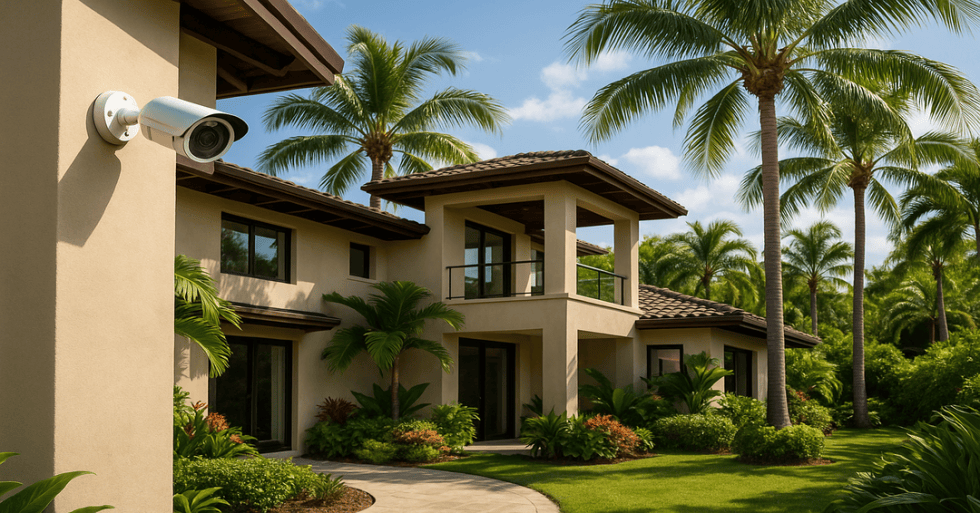
Most of what is above costs attention rather than money. Some of it does not. Perimeter fencing on acreage, a camera and alarm system across a large or remote property, gated access, a caretaker’s quarters, lighting along a long driveway — on a farm, a finca or a multi-building property these run to real numbers, and they tend to be needed all at once rather than gradually.
That is a case where borrowing against the property to protect the property makes sense. Our minimum is $50,000, so this is a fit for a substantial holding rather than a single gate or a doorbell camera — but for a large property where security has become the difference between using it and not, it is a straightforward use of the equity already sitting there.
We lend from $50,000, secured against registered property in Costa Rica, over six months to three years. No residency required. If that is useful, WhatsApp +506 4001 6413, call or email info@gap.cr. If it is not, the rest of this page still stands on its own.
We Do What Banks Won’t
✓ No credit score required✓ Any nationality welcome✓ 6–36 month flexible terms✓ Interest-only payments✓ Loans from $50,000 USD✓ Closes within 10 business days✓ Up to 50% LTV
Property-backed private lending · Fast approvals · No bank bureaucracy
Article by Glenn Tellier (Founder of CRIE and Grupo Gap)
Sign up to start your loan today!
Related Posts


